
Every extra second or confusing step in your checkout costs you revenue, especially if you sell digital products, memberships, or online services. If checkout is frustrating, customers may abandon your site and look for another seller with a smoother payment process.
Choosing the right platform is about more than just accepting payments. It’s also about protecting your margins, increasing your average order value (AOV), and ensuring your back-end doesn’t turn into a technical nightmare.
Whether you sell digital products, subscriptions, or monthly memberships, your checkout page is one of your most important levers for growth.
Key takeaways:
- Short, focused checkouts convert better than feature-heavy ones – fewer steps, fewer fields, fewer decisions for customers to have to make.
- Mobile-first flexible payment options are no longer “nice-to-haves”; they’re the default expectation for over half of your customers.
- A high-converting checkout should include built-in optimization tools to boost your revenue.
Table of Contents
ToggleThe reality of conversions in 2026
We’ve moved past the era where a simple “Buy Now” button was enough to grow an online business. Cart abandonment rates have gradually increased, rising from 68.07% in 2014 to 70.19% in 2025. In 2026, it’s predicted to go up further, to 70.22%. While some of that is just window shopping, a huge chunk of those lost sales comes down to a “too long or complicated checkout process.”
Furthermore, security remains a top-of-mind issue. Roughly 19% of shoppers abandon carts because they don’t feel safe sharing sensitive payment information. Often, this mistrust stems from a website that looks outdated or isn’t regularly maintained.
To prevent this, make sure your website provider has top-notch security credentials, and display clear proof of them on your site. Regularly updating and refreshing your page is just as crucial, helping customers feel confident and secure every time they shop.
Hosted vs. embedded checkout – what you’re really choosing
When you set up your online store, you generally face a fork in the road: do you host the checkout on your own site, or do you use a dedicated hosted platform?
ThriveCart offers both options, so you can choose what works best for you.
An embedded checkout lives directly on your domain. It feels seamless because the user never leaves your URL. However, this can put the heavy lifting of security and SSL maintenance on your shoulders – ThriveCart actually generates SSL for you, so there’s nothing to worry about. But this may not be the case with all checkouts. If your site’s code clashes with a plugin update, your “Buy” button might just stop working, and you might not know for hours, or worse, days.
On the other hand, a hosted checkout (the preferred option for most ThriveCart users) takes the user to a dedicated, high-security page to finish the transaction. In years past, people worried this would hurt conversions. But in 2026, it’s often the opposite.
A dedicated checkout page often loads faster than a bloated WordPress site and provides a “clean” environment free from sidebar distractions. For many merchants, learning to streamline checkout means moving away from messy self-hosted plugins toward a dedicated, battle-tested environment.
👀➡️ RELATED READING | ‘16 Tips to Streamline Your E-commerce Checkout Experience’
What makes the best checkout system?
When you are looking for a platform to handle your online sales, you need to look past the flashy logos and focus on the mechanics. A great system handles the “boring” stuff, which includes tax calculation, PCI compliance, and SSL security, so you can focus on the strategy to generate more revenue.
1) The single-step vs. multi-step debate
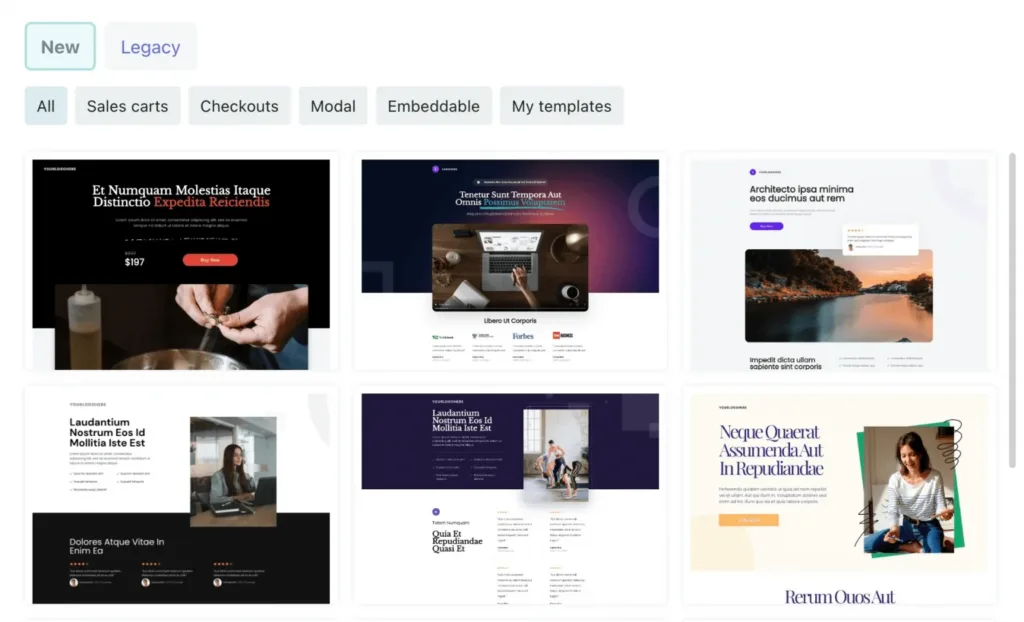
In the past, many platforms used a five-step process. In 2026, that’s a death trap. You want a system that leans toward a single-step or a “breathable” two-step process to ensure a smooth customer experience.
Single-page checkouts tend to perform better when:
- You sell digital products or services
- The offer is straightforward
- You want speed over explanation
Multi-step checkouts work when:
- You need to segment information cleanly
- You use progress indicators
- Each step feels light and intentional
What doesn’t work in 2026 is long, unstructured flows.
Single-step checkouts convert better because they remove the “what’s next?” anxiety. The customer sees the finish line from the moment the page loads.
👀➡️ HANDPICKED FOR YOU | ‘How to Increase Checkout Conversion Rates: 12 Strategies‘
2) Digital wallets and payment flexibility
If you’re still forcing every customer to type in a 16-digit card number, you’re losing sales. The best systems integrate natively with various payment methods, including digital wallets and international payments, and support browser-level autofill for faster card entry. Tokenization securely saves card details for future purchases. These enable “Express Checkout,” where the user authenticates with Face ID or a fingerprint, and the system automatically pulls key details like their name and address.
3) Revenue expansion tools
Your checkout shouldn’t just be a passive money collector. It should be an active salesperson. This is where both order bumps and one-click upsells come in.
- Order bumps: A small checkbox on the page (e.g., “Add a 30-day workbook for $17”).
- One-click upsells: After the customer clicks “Buy,” they’re shown a complementary offer they can add to their order with a single click.
4) Subscription management
Since most creators want recurring revenue, your checkout needs to handle dunning. That’s the process of automatically emailing people when their credit card fails. ThriveCart handles this natively, which saves you from losing subscribers to “accidental” churn.
Top website checkout systems
1) ThriveCart
If you’re looking for a system that balances power with ease of use, there’s a reason ThriveCart has become the standard. It isn’t just a way to take a debit or credit card payment; it’s a high-converting checkout and funnel platform with integrated course creation designed to maximize the value of every customer who lands on your page.
One of its biggest strengths is its versatility. It primarily handles digital products and services, courses, digital downloads, and recurring payments, while also supporting physical products. If you’re a merchant or content creator, ThriveCart offers a structured funnel system with seamless checkouts, upsells, and downsells. This makes it much easier to sell subscriptions without complex external plugins or a full website.
The platform includes a checkout design editor that gives you full control over the look and feel of your pages. You can also manage subscriptions, access a customer portal where users can update their own details, and let customers pay via their preferred payment processor.
If you’re looking to scale, you should explore how to create sales funnels with ThriveCart. It’s about building a path that guides the customer from their initial interest to a multi-item purchase.
👀➡️ KEEP READING | ‘How to Create a Sales Funnel with ThriveCart and Get High Conversions’
2) Shopify checkout
Shopify provides a reliable, standard experience. While it is stable, keep an eye on the payment processing fees and monthly fees, which can add up as you scale. It’s for traditional retail, but it may require extra plugins to match the specialized conversion features of other platforms.
3) WooCommerce
WooCommerce is a WordPress plugin, but it requires multiple plugins for advanced functionality. You usually have to stitch together several different plugins. This can typically lead to slower load times and potential security vulnerabilities if the plugins aren’t updated regularly.
👀➡️ EXPLORE MORE | ‘ThriveCart vs WooCommerce in 2026: Which Is Right for You?’
How to increase your Average Order Value (AOV)
A common mistake is thinking the job is done once the customer lands on the page. In reality, that’s where the most profitable part of your business begins. To truly win, you need to focus on increasing checkout conversion rates through proven psychological triggers. Strategies for success:- Recover failed payments: Use automated dunning sequences to reach out to customers whose cards/payments were declined.
- Secure customer data: Tokenization allows you to bill future purchases without the customer re-entering their info.
- Smart retargeting: Use your data to offer personalized upsells based on what’s already in the cart.
Want to sell digital products? Here’s a ranking of which products sell best (and which don’t).
FAQs
What makes a checkout system convert better?
Speed, clarity, and fewer decisions for customers to make. One-page layouts, guest checkout, and multiple payment options consistently reduce abandonment.
What’s the difference between a payment gateway and a checkout system?
A payment gateway is the “pipe” that moves money. A checkout system is the “interface” your customer interacts with. You need both, but a good checkout system sits on top of the gateway to improve profitability.
Is a one-page checkout always better?
Generally, yes. It reduces friction and shows the user exactly what’s required from them. For 90% of digital services and goods, one page is the winner.
👀➡️ YOU MIGHT ALSO LIKE | ‘How to Sell Digital Products in 2026: A Step-by-Step Guide’
Wrapping up
The real question isn’t “Which checkout platform has the most features?”
It’s this:
Where do you want complexity to live, before or after payment?
General platforms push complexity into checkout. Conversion-focused platforms absorb it behind the scenes.
In 2026, the best website checkout system is the one that:
- Gets buyers through payment quickly
- Maximizes revenue per transaction
- Doesn’t require rebuilding your tech stack every time you launch
For many merchants and content creators, that’s why ThriveCart remains a key part of the process. It takes the technical burden off your shoulders while giving you enterprise-grade features that used to require a team of developers.
Discover the leading sales platform for digital course creators, coaches, entrepreneurs, and online businesses looking to boost revenue, drive conversions, and scale audiences.

