Investing in Affiliate Marketing: How Much Does it Cost to Start?
Last Updated: March 31, 2026


Whether you’re replacing the fridge in the company kitchen or starting up a new initiative, there’s one question to which everyone wants the answer: How much is this thing going to cost?
This is the same question many executives and managers have when considering starting an affiliate marketing business arm. Additional questions include: Are affiliate sales worth it for the amount of money it costs? What types of affiliates should I consider? Should I get involved with an affiliate network? Will affiliates really want to work with my ecommerce business?
And most importantly: Overall, how much does it cost to start affiliate marketing?
If these questions sound like you, you’ve come to the right place. Business owners who sell digital products such as SaaS (software as a service) or online courses are especially eager to discover how to start affiliate marketing, because it’s one of the best ways to earn passive income. This can afford you a lifestyle and an income that traditional jobs are hard-pressed to match.
While affiliate programs are a worthwhile and typically affordable investment for large companies, small startups are often less certain about the budgetary side.
In this post, we’ll explore three types of affiliates, what expenses you should prepare for, and tips for creating the best possible approach to online marketing. By the end of this article, you’ll have a much better idea of how much it costs to invest in affiliate marketing and whether it’s for you.
Types of Affiliate Marketing
First, it’s important to understand the types of affiliate marketing you might use to generate interest in your brand and drive people to your website and shop.
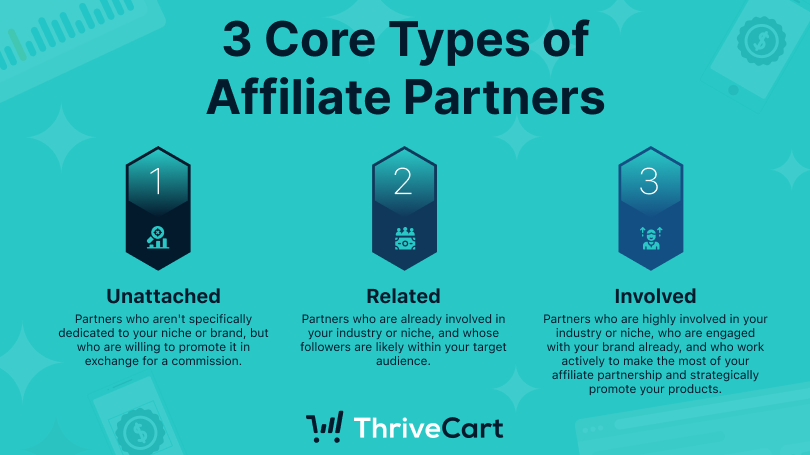
Unattached Affiliate Marketing
In this model, affiliates usually place ads on their sites, then get paid each time someone comes to your site. In the pay-per-click approach, they get paid whenever someone clicks on the ad. In other models, they may get paid if someone signs up for an email list or buys a product.
Whatever the case, the affiliate is “unattached,” meaning that their digital real estate doesn’t need to have anything to do with your product. For instance, perhaps they discuss pet care with people, but you sell a training course for plumbers. Although this may sometimes generate income for you or them, the ads are far less likely to resonate with their audience because they’re unrelated.
It’s also the model people are more likely to choose if they don’t really intend to work hard on their blog and simply want to put up a raft of links to see what happens. In other words, it’s not ideal.
Related Affiliate Marketing
This form of affiliate marketing is much like the above, except the affiliate’s niche and your product are related rather than unrelated. If a blog is about service-industry trades, for example, then promoting your training course for plumbers makes much more sense. Similarly, if their blog is about pet care, then an affiliate blogger is better able to entice their audiences by partnering with pet companies.
With related affiliate marketing, you can take several approaches. Some bloggers like to embed their links in the text with a related anchor, while others like to link images to your product for visual effect. Sidebar and banner images also work.
If you enjoy working with influencers on social media, that can work too. Influencers who focus on a specific and related niche can put a link to your product in their profiles or stories for Instagram and TikTok or embed it right in the post on Twitter, Facebook, or LinkedIn.
Involved Affiliate Marketing
The top-shelf affiliate marketing model is involved affiliate marketing. As the name suggests, the blogger, social media influencer, or website owner is personally invested in your product. They’ve tried it, they like it, they enjoy creating content to make sure their audiences know all about it.
This puts trust on your side. Because the readership or following is dedicated to the blogger or social influencer, the barrier to entry feels lower for them. If their role model loved it, then it must be safe for their kids, their pets, their skin, etc. Plus, involved affiliates usually have more channels to reach their audiences, like email marketing or beginners’ tutorial vlog series.
The 4 Main Expenses of Running an Affiliate Marketing Program
All right, now let’s get down to business. Exactly how much does it cost to start affiliate marketing?
The unpleasant truth is that if you want to do this well, then there are multiple startup costs of which you should be aware before jumping in. However, each of the following tools will pay itself back many times over in ROI if you know how to use them well. Let’s take a look.
1. Affiliate Management Software
Affiliate marketing software is an online SaaS tool that enables you to manage all your affiliates in one place. Setting up a marketing strategy that involves affiliates involves a lot of moving parts – which is fine so long as you have somewhere to track each new affiliate and other aspects of your online business.
When searching for the right software to manage affiliate marketer relationships, look for one that is low-cost but of high quality. Make sure it enables you to set up landing pages, share resources with your affiliates, track their sales, and pay them in a timely and simple fashion.
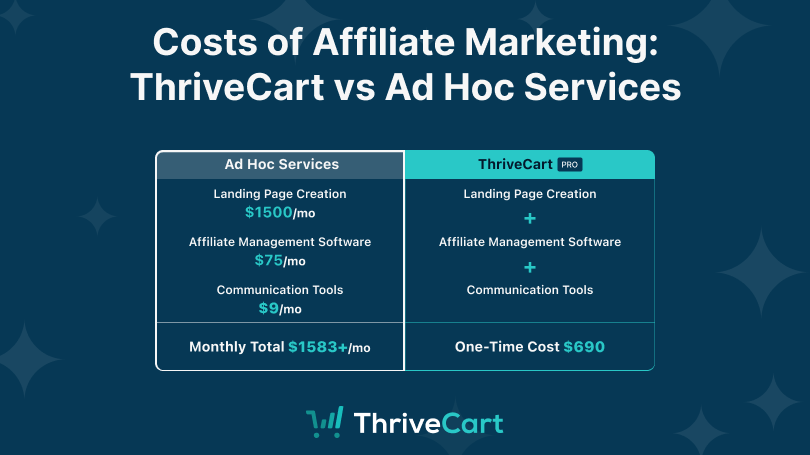
Don’t go too low-cost, though, which can mean you’re not getting a good product. If you want your marketing efforts to succeed, you should plan to invest. ThriveCart, for instance, offers lifetime membership to an affiliate platform that directly integrates with your product sales, all for less than $700. You get tons of resources – everything you need for a successful affiliate program for life – and you’ll never have to make a payment again.
2. Website/Landing Page Builder Tools
An affiliate partner only provides the clicks, leads, or site visits, but it’s down to the website experience to convert the user. It is your site that will ultimately result in the sale, not the affiliate’s. This is where digital marketing and search engine optimization (SEO) best practices come in.
Highly optimized landing pages full of quality content are what help the site visitor move down the funnel to the sale. You will choose your landing page type depending on your goal: lead capture, free trial, signup, customer success page, and so forth.
Again, it can be tedious to set up a proper landing page through WordPress or similar website builder, but it doesn’t have to be. For instance, ThriveCart enables users to almost instantly create high-converting landing pages for core products, then set up powerful affiliate marketing rules for each of them, linking your existing domain name and content marketing tools.
3. Canned, High-Quality Content and Images
Providing quality content and images for affiliate partners to use in outreach to your followers is important. It’s better not to leave your messaging up to chance.
Luckily, you don’t have to! You can create branding kits or collections of collateral that contain certain taglines, product explanations, and images for your affiliates to use when connecting with their email list, making YouTube videos, or placing ads on their social media profiles. Make sure to include:
- Logos
- Brand guidelines
- Company colors
- Design elements
- Beautiful photos and videos
Again, where possible, you want to wrap the pricing for this service into one you’re already using. When you use ThriveCart’s affiliate partner management tool, you can do just that. Share official content and images related to your business, track how well affiliates are performing, and finetune your approach with each iteration.
4. Performance Tracking Tools
It’s important to keep track of ad performance, conversion rate tracking, organic traffic growth, referral stats, and user page interaction for every affiliate marketer with whom you work. If you don’t know which the best-performing ads and campaigns are, after all, then you can’t replicate them later.
Using a performance tracking tool can help you make the most of your affiliate program, enabling you to:
- Monitor how well your affiliate marketing software works
- Increase the power of your SEO tools
- A/B test your landing pages for the best results
- Track which of your images, video, and brand collateral perform best
Performance tracking tools do represent another expense. At the same time, though, you run a huge risk of wasting your money if you leave your marketing efforts up to chance.

Tips to Build a Successful Affiliate Marketing Program
Now that you know the raison d’être and the tools needed to set up an affiliate program that works, it’s time to take a look at a few ideas to make life easier for you. If you’re a little intimidated by the answer to “How much does it cost to start affiliate marketing?” then these step-by-step tips are for you.
Recruit partners who are well-known to your target audience.
As we discussed when talking about the types of partners you can seek out, the best affiliate for any affiliate manager to have is an involved one. Look for people who:
- Do their keyword research and care about SEO
- Have devoted followings
- Cultivate an omnichannel approach, such as bloggers who also have a TikTok presence or run YouTube channels
- Entrepreneurs who make money in ways other than affiliate marketing, which shows they’re highly motivated
It’s always helpful to work with people who have a large audience. Any time someone has tens of thousands of followers on a platform (or multiple), you can feel pretty certain they’re spending lots of time honing their craft.
However, don’t shy away from affiliates who have smaller followings. These can still prove plenty worthwhile, assuming their following is a dedicated and enthusiastic one. Check this by dividing the number of likes or views on a given post by the number of followers. If the resulting number is above .1 (which translates to 10 percent), then there’s a good chance they’re a good bet for you.
Start slow. Focus on promoting only your best products through affiliates.
As with any marketing campaign, it’s easy to get overwhelmed. At this point, you’ve got a decent amount to learn about successful affiliate marketing, from how the affiliate commission structure works to whether you want to pay per click or use another model.
Rather than letting yourself get overwhelmed, start with only one or two products for affiliates to promote and learn from their results. Then, revamp your program based on those results as it grows, adding more products when desired.
If necessary, don’t hesitate to consult the FAQ’s in the help desk of your affiliate marketing software. If you’re using the right tools, this page should be thoroughly fleshed-out with answers to the most common problems. This is a good indication that the software will lead to your success, especially if the options for contacting support are also clearly marked on the page.
Set affiliate commissions strategically.
One of the main affiliate marketing program costs is payouts. There’s no such thing as affiliate website marketing without commission rates, so make sure your payment structure works for you.
Again, this is where a good piece of affiliate marketing software comes in. It should let you set variable commission structures based on differentiators such as the affiliate product, or who the affiliate is. Flexible commission structures are perhaps the best way to make sure you’re not paying too much for affiliate marketing.
A tool such as ThriveCart provides a wealth of payment capabilities, in addition to step-by-step instructions so you can ensure excellent upfront routines. That way, you can feel safe knowing you’re neither wasting your money nor leaving your affiliates without the motivation to succeed.

Sell More, Brand Better with Affiliate Marketing
At the end of the day, affiliate marketing might have a steep learning curve, but it’s not too complicated for the average startup or small business. By working with trusted affiliates, starting slow, and using strategic commission strategies, you can succeed more rapidly than you might think!
Only if you work with the right platforms, of course. Here at ThriveCart, our entire purpose in life is to help businesses build an affordable affiliate marketing program that works with minimal effort. Within minutes, we help you create an affiliate sign-up page on your website then start to manage your affiliate partners through our native dashboard.
Plus, we have a one-time pricing system, the cost of which also includes high-converting marketing funnel tools. If you’re worried about fitting everything into the budget, don’t be! Your one-stop shop is here … and here to stay.
Would you like to learn more about the possibilities? Sign up for ThriveCart’s special offer and try it for yourself today!