

Creating an online course is just the beginning. If your students are logging in, watching a few lessons, and then disappearing, you’re not alone. Average course completion rates are typically low and that’s not because your content isn’t valuable. It’s because isolated learning doesn’t work for most people.
But there is an easy solution – community.
Research shows that a community of engaged students translates into higher completion rates, lower refund rates, higher upsell conversion, and longer retention. One study reports course completion rates as high as 90% for selective cohort-based online programs.
A thriving community gives your students connection, accountability, and a reason to show up week after week, month after month. It also gives you something priceless: loyal, engaged learners who complete your courses, refer their peers, and stick around for the long term.
But building a community that truly works takes more than just setting up a group and hoping people talk to each other.
Key takeaways
- Community transforms passive learners into active, engaged participants – course completion rates can reach as high as 90% when students are supported
- The most effective communities are built with clear purpose, consistent leadership, and structured engagement from day one
- Gamification, leaderboards, experience points, badges, discussion tools, and member profiles are no longer “nice to haves” – they’re the features that keep students coming back
- Integrating community directly into the learning experience (rather than bolting it on as an afterthought) is the single biggest lever for student retention
Here are 10 best practices to help you build a community that genuinely thrives.
What is a creator-led community?
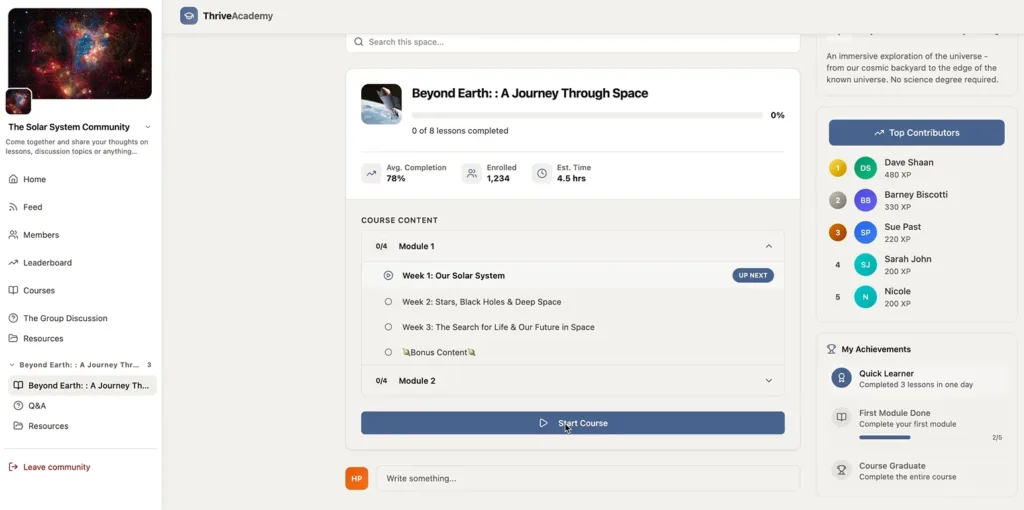
A creator-led community is a dedicated space – online or in person – where creators/coaches and their students gather to learn together, share what they’re working on, and support each other’s growth. It might be a private forum attached to your course, a membership-based group, or a fully integrated social learning environment built around your content (like ThriveCart Academy). The format varies. The purpose doesn’t: to replace the isolation of solo learning with something more human.
Building an online business can feel lonely. Your non-creator friends may not fully understand what you’re navigating. Your students often feel the same way – working through your course in silence, with no one to ask when they get stuck and no one to celebrate with when something finally clicks.
A well-built creator-led community changes that dynamic entirely. It gives members:
- A place to ask questions without feeling like they’re bothering anyone
- Peer accountability that keeps them moving forward when motivation dips
- Real connections with people who understand the journey
- A sense of belonging to something bigger than a single course or transaction
And for you as a coach or creator, the benefits go even further:
- Higher course completion rates (and the social proof that comes with them)
- Stronger retention, because engaged members are far less likely to churn
- A feedback loop that tells you exactly what your audience needs next
- A foundation for upsells, referrals, and long-term loyalty
That last point is worth dwelling on. When students feel like they’re part of a genuine community – not just a customer – they behave completely differently. They show up. They contribute. They buy again.
👀➡️ RELATED READING | ‘8 Cross-Selling and Upselling Strategies That Maximize Revenue in ThriveCart‘
1) Define your community’s purpose before you launch
Before you invite your first member, get crystal clear on what your community is for. Ask yourself:
- What outcomes do you want members to achieve?
- What kind of conversations do you want to see?
- Who is the ideal member, and what do they need from this space?
A community without a clear purpose tends to go quiet fast. When members understand why they’re there and what they’ll get out of it, engagement happens naturally.
2) Make community the hub, not an afterthought
Too many creators treat their community as a bolt-on: a separate Facebook group or Discord server that students are vaguely aware of but rarely visit.
The most successful creator communities flip this. They make the community the central experience, with course content living inside it – not the other way around.
When students land in your community first, they’re constantly reminded that they’re part of something bigger than just a course. That sense of belonging is what keeps them coming back.
👀➡️ YOU MIGHT ALSO LIKE | ‘How to Create a High-Converting Sales Funnel (Beginner-Friendly Guide + Templates)’
3) Tie discussions directly to your content
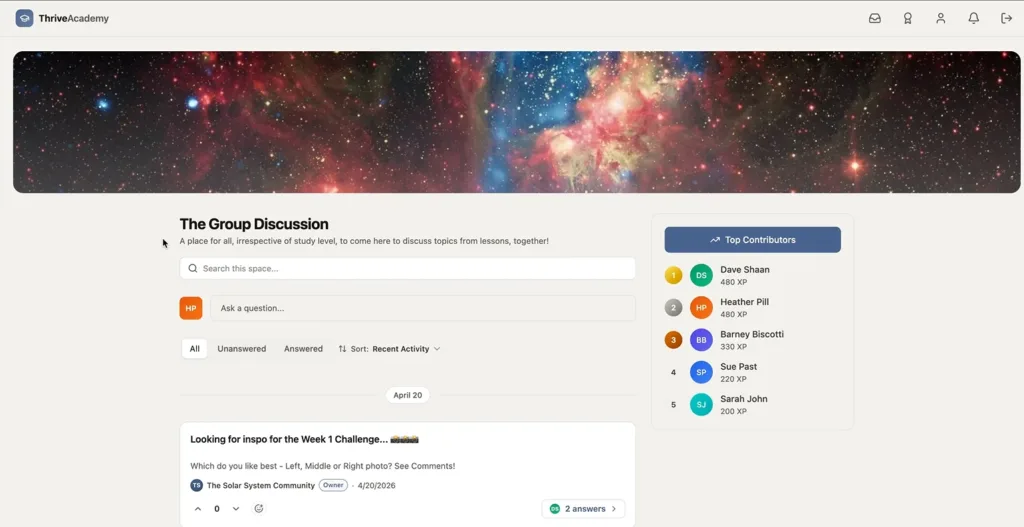
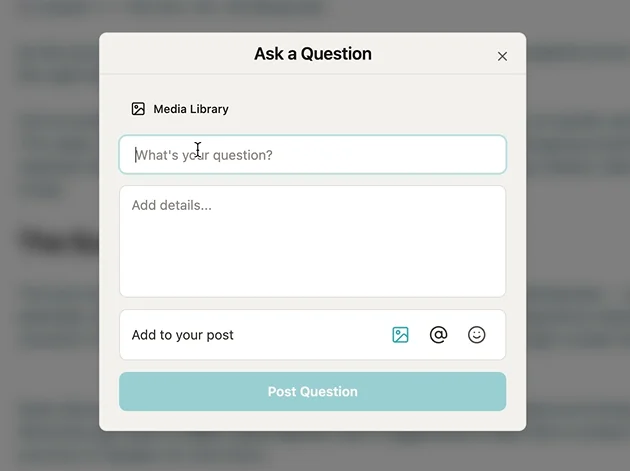
One of the most underused engagement tactics is lesson-level discussion. When a student finishes a module and has a question – or a win to share – they should be able to post right there, in context, without jumping to a separate platform.
- Lesson-specific threads keep conversations relevant and searchable
- Peers who are at the same point in the course can jump in and help
- You can answer questions once in a way that benefits every future student
This kind of contextual discussion turns passive content consumption into active, social learning.
4) Use gamification to motivate consistent engagement
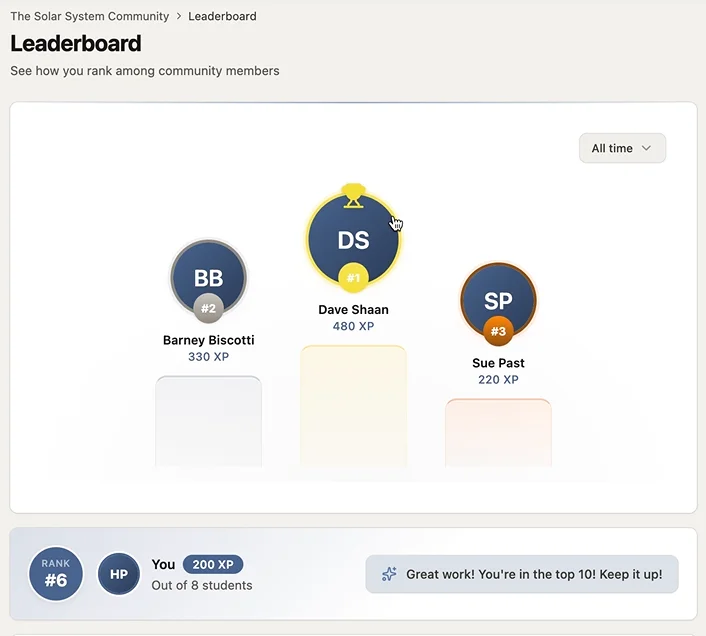
Points, badges, streaks, and leaderboards aren’t just for video games. When used thoughtfully, gamification can be a powerful driver of community participation:
- Experience points and achievement badges reward students for taking action.
- Daily streaks encourage regular logins and progress.
- Leaderboards create healthy competition and visibility for active members.
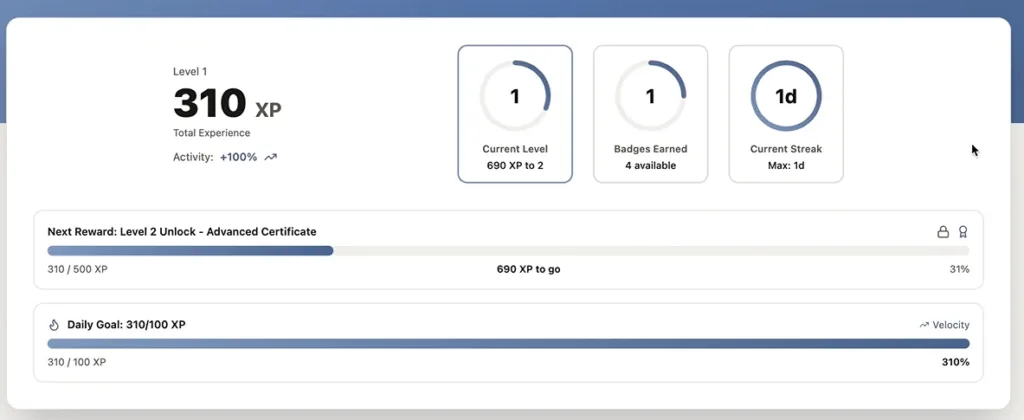
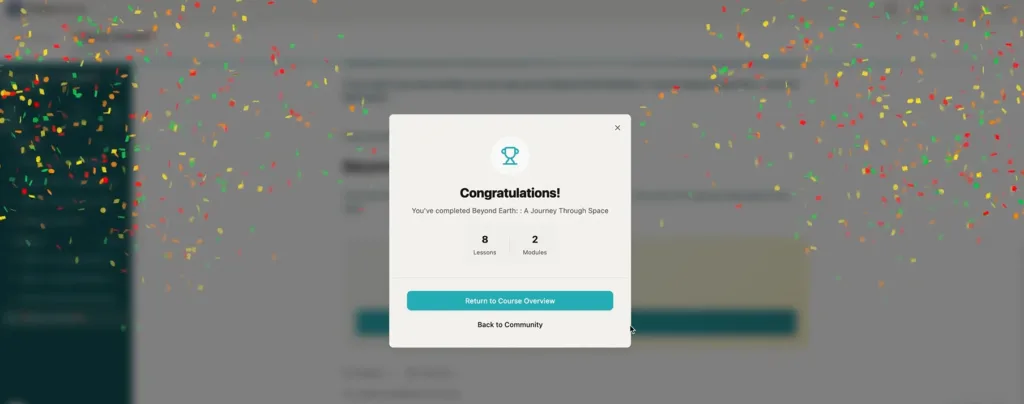
The key is making the rewards feel meaningful. Celebrate real milestones – completing a module, posting a first win, or helping a fellow member – not just arbitrary activity.
Remember those low average course completion rates we mentioned upfront? Well, there’s room for improvement – plenty of it, it turns out, with one study reporting an average course completion rate of 42% for supported/coached online courses. Better still, that average gets as high as 85%-90% for selective cohort-based online programs.
5) Build rich member profiles and a searchable directory
Your students have a lot to offer each other. But they can only connect if they can find each other.
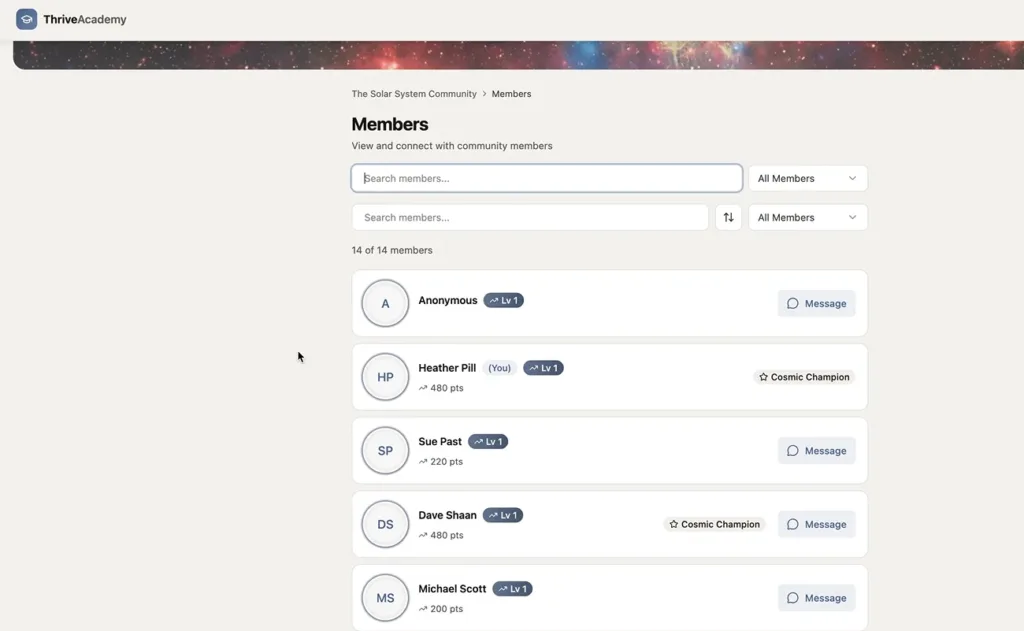
A member directory with searchable profiles helps students:
- Find accountability partners with similar goals
- Identify peers at the same stage in their learning journey
- Spot complementary skills for potential collaborations
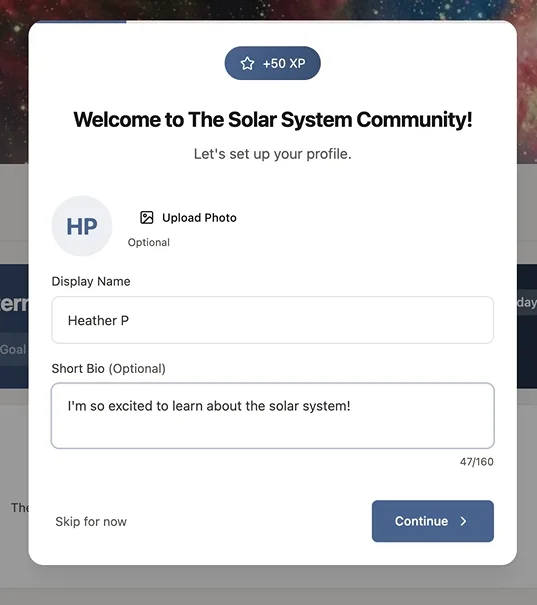
Encouraging members to fill out their profiles thoroughly – including their goals, background, and what they’re working on – dramatically improves the quality of connections in your community.
👀➡️ MORE FROM THE BLOG | ‘The Skills Crisis Gold Rush: 4 Ways to Turn Your Expertise Into a 6-Figure Education Empire‘
6) Show up consistently as the community leader
Here’s a truth that many creators underestimate: you are the biggest driver of community engagement, especially in the early days.
Best practices:
- Post regular updates, announcements, and behind-the-scenes content.
- Respond to member questions promptly.
- Celebrate wins publicly, even small ones.
- Pin important posts so new members always know where to start.
Your presence signals to members that this is a living, active space worth investing their time in. When the creator goes quiet, the community usually follows.
7) Host live events and Q&As regularly
Async discussion is great, but nothing builds community like real-time interaction.
Best practices:
- Monthly live Q&As give members direct access to you.
- Workshops and masterclasses add extra value beyond the core course content.
- Peer-led sessions and study groups build that all-important connection between members themselves.
Even a short, informal live session once a month can dramatically increase the sense of community and reduce churn.
8) Offer multiple access tiers
Not every community needs to be exclusively paid or exclusively free. Offering tiered access gives you flexibility and opens up more entry points for new members.
Consider:
- A free community to build awareness and grow your audience
- A paid tier with exclusive content, closer access to you, or early course access
- An invitation-only or cohort-based tier for your most committed learners
Multiple access models also let you test what resonates with your audience before committing to a single structure.
👀➡️ RELATED READING | ‘Free vs. Paid Trials: How to Choose the Right Strategy for Your Digital Products’
9) Set clear community guidelines – and enforce them
Every thriving community has ground rules. Without them, even the best communities can become noisy, toxic, or just off-topic.
Your guidelines should cover:
- The type of content that’s welcome (and what isn’t)
- How members should treat each other
- How spam, self-promotion, and off-topic posts are handled
Make the guidelines visible, ideally in a pinned post that every new member sees. And don’t be afraid to enforce them. Consistent moderation is what makes members feel safe enough to open up and ask real questions.
10) Celebrate member wins loudly and often
One of the simplest and most effective things you can do? Make a big deal out of member progress.
Best practices:
- Acknowledge milestones in the community feed.
- Give members a dedicated space to share wins and breakthroughs.
- React, comment, and amplify their achievements.
When students see their peers being celebrated, it reinforces that progress is possible and that showing up matters. It also creates social proof that your course actually works – which is priceless.
👀📗➡️ RELATED READING TO DOWNLOAD TODAY | ‘The New Skills Economy: How Creators Are Redefining Specialized Professional Learning‘
Ready to build your own creator-led community?
The gap between a course that people buy and then abandon, and one they complete and rave about often comes down to one thing: community.
Communities are the backbone of ThriveCart Academy – which was built to make every single one of these best practices easier to implement. From activity feeds and gamification to embedded course players and moderation tools, everything is in one place.
Discover what’s possible with ThriveCart Academy & Communities.
