

Max, a London-based entrepreneur and business coach, had built something special. His stock market and crypto trading courses were attracting students from across the UK and beyond. His content was solid, his marketing was working, and people were buying.
But Max made one critical mistake.
He used a basic checkout platform that only processed the initial sale. No upsells. No downsells. No order bumps. Just a simple transaction page that sent customers straight to a thank-you page.
So when a student bought his £297 foundation course, that was it. Max never offered them his advanced technical analysis module. He never presented his premium one-on-one coaching tier. He never suggested his monthly market analysis subscription.
Max was leaving thousands of pounds on the table every single month – simply because his checkout couldn’t do what ThriveCart does automatically: continue selling after the initial purchase.
Key takeaways:
- Sales funnels increase average order value by presenting strategic offers after checkout, when customers are most likely to buy
- Order bumps work differently than funnels: bumps are impulse offers on the checkout page, while funnels handle higher-value offers post-purchase
- ThriveCart’s drag-and-drop funnel builder lets you create unlimited upsells and downsells without developers or additional plug-ins
- Automated fulfillment means every offer is delivered instantly, with no manual work required
Read on to find out what Max could’ve done differently, plus stick around to watch this short video on how to maximize your sales funnel using ThriveCart’s upsells, downsells, and order bumps. 👇
What is a sales funnel (and why creators need one)
A sales funnel is the sequence of offers a customer sees after completing their initial purchase. Once someone has already pulled out their credit card and said yes to your product, they’re in a buying state of mind – making it the perfect moment to present additional, complementary offers.
This isn’t about being pushy. It’s about serving your customers better by showing them relevant upgrades, add-ons, or premium tiers they might genuinely want.
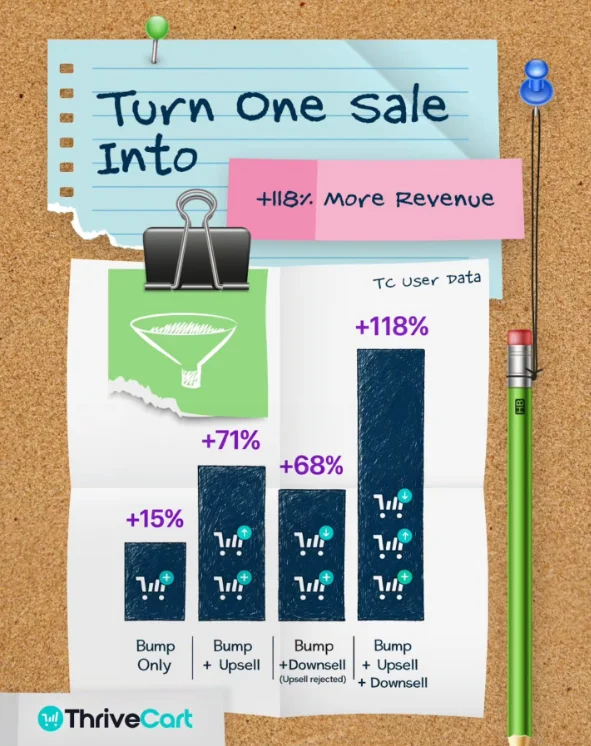
The numbers back this up. ThriveCart data shows that one-click upsells convert at an average of 118% higher than cold traffic offers. When implemented correctly, funnels can increase your average order value by 30% or more.
👀➡️ YOU MIGHT ALSO LIKE | ‘8 Cross-Selling and Upselling Strategies That Maximize Revenue in ThriveCart‘
Understanding bumps vs. funnels
Before you build your funnel, you need to understand where order bumps fit in.
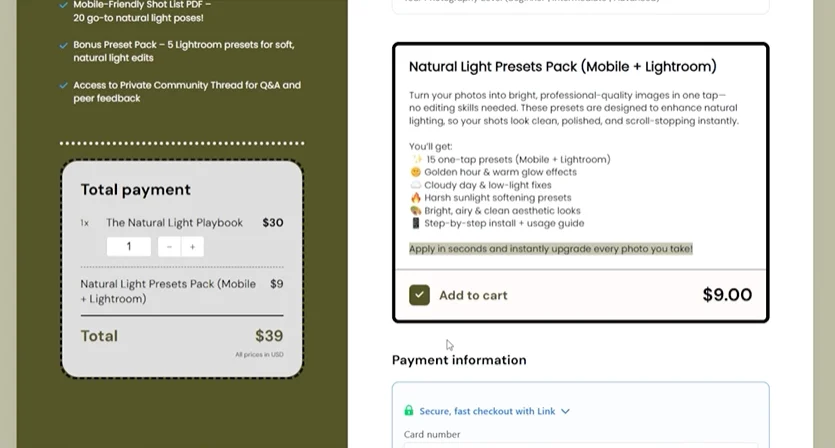
Order bumps are:
- Low-friction impulse offers
- Displayed directly on the checkout page
- Added to the cart before payment is processed
- Small, obvious, complementary products
- The kind of offer customers accept without overthinking
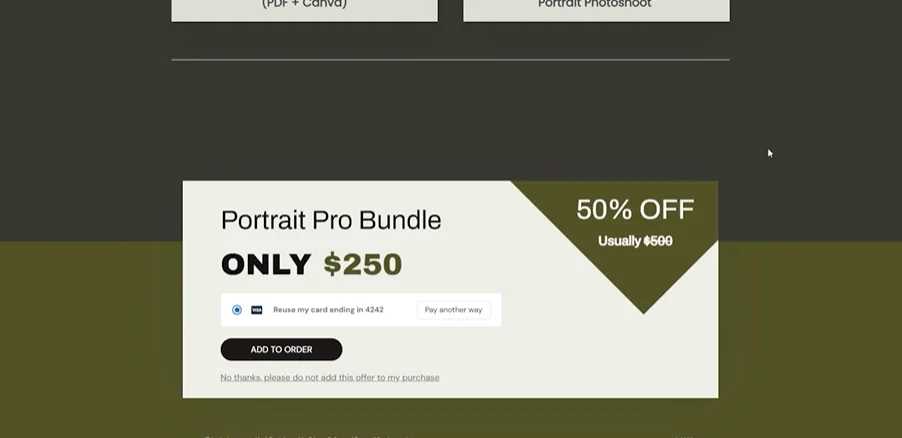
Sales funnels are:
- Post-purchase offer sequences
- Shown after the customer has already paid
- Higher-priced or more complex offers
- Items that need more selling, like subscriptions or premium upgrades
- Presented one at a time, with strategic downsells if declined
Think of bumps as the “would you like fries with that?” and funnels as the premium meal deals presented at the drive-through window after you’ve already ordered.
👀➡️ RECOMMENDED READING | ‘How to Successfully Deliver Courses, Memberships, and Downloads With ThriveCart Fulfillment‘
How to build your ThriveCart sales funnel
Step 1: Create your upsell and downsell products
Before building your funnel, you need to create the actual products you’ll offer.
- Navigate to your Products area in ThriveCart
- Click the Upsells tab to create upsell products
- Click the Downsells tab to create downsell offers
- Set your pricing and configure fulfillment settings for each
Step 2: Enable the funnel builder
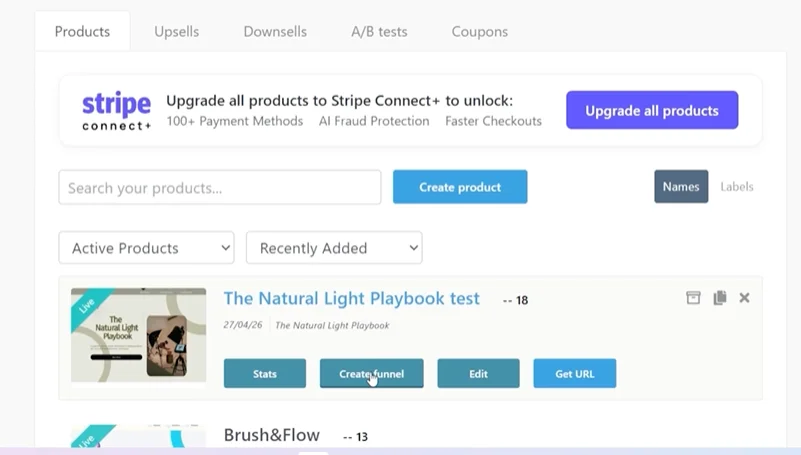
- Go to your main product page
- Click the “Create Funnel” button next to your product
- The funnel builder will open (either the dashboard builder for Legacy templates or the Enhanced editor for newer templates)
Step 3: Add your first upsell
- Click the dropdown at the top of the editor
- Select “Add funnel item“
- Choose your upsell product
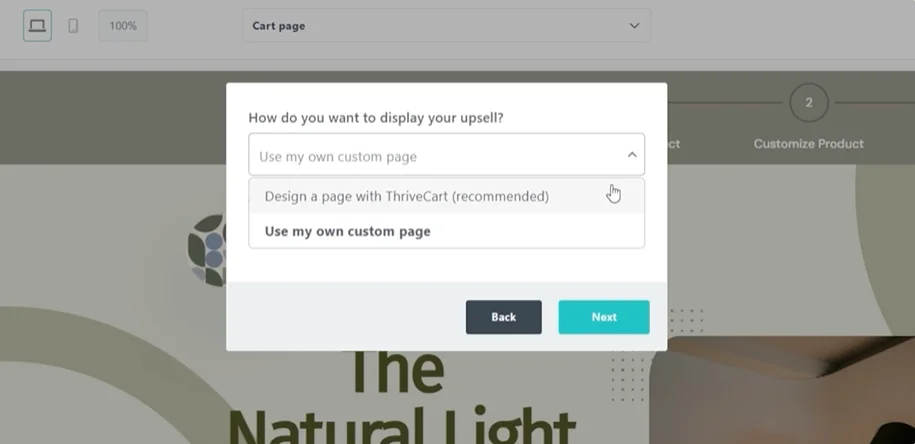
- Decide whether to design the page in ThriveCart’s drag-and-drop editor (recommended) or link to your own custom page
Step 4: Configure fulfillment
Your upsell fulfillment works the same way as your main product:
- Digital products: enter the URL where customers access the content
- Course access: integrate with ThriveCart’s LMS
- Physical products: set up shipping automation
- Subscriptions: define billing cycles and access rules
Step 5: Add downsells strategically
- Go back to “Add funnel item“
- Select Downsell this time
- Choose which upsell it’s attached to (downsells only appear when customers decline the specific upsell)
Step 6: Build your sequence
You can add multiple upsells and downsells in sequence. Here’s how the customer journey works:
- Customer completes checkout
- They see Upsell 1
- If they accept → they move to Upsell 2
- If they decline → they see the attached Downsell, then move to Upsell 2
- They continue through your funnel until they reach the success page
👀➡️ REAL CUSTOMERS, REAL SUCCESS STORIES | ‘The Freedom Formula: How Rob Cornish Turned Redundancy Into $41,000 a Month in Recurring Income‘
Your funnel runs automatically
Once you’ve built your funnel, it runs automatically for every customer. There’s no manual intervention required. ThriveCart handles the presentation, payment processing, and fulfillment for every offer in your sequence.
You set it up once, and it works 24/7 to increase your revenue per customer.
👀➡️ HANDPICKED FOR YOU | ‘How to Sell Digital Products in 2026: A Step-by-Step Guide‘
Start building your funnel today
If you’re a creator, coach, or entrepreneur selling digital/physical products, courses, or services, a properly structured sales funnel isn’t optional anymore – it’s essential infrastructure.
ThriveCart gives you everything you need to build high-converting funnels without transaction charges or technical complexity. Create unlimited products, unlimited funnels, and unlimited upsells with a single one-time investment.
Don’t make Max’s mistake. Start maximizing the value of every customer who says yes to your work.
