
The 11 best sales funnel software platforms compared
Each platform below serves different business needs and growth stages. This comparison evaluates core functionality, pricing models, and ideal use cases to help you identify the best fit for your specific requirements.
1) ThriveCart – best for courses, communities, and conversion focus
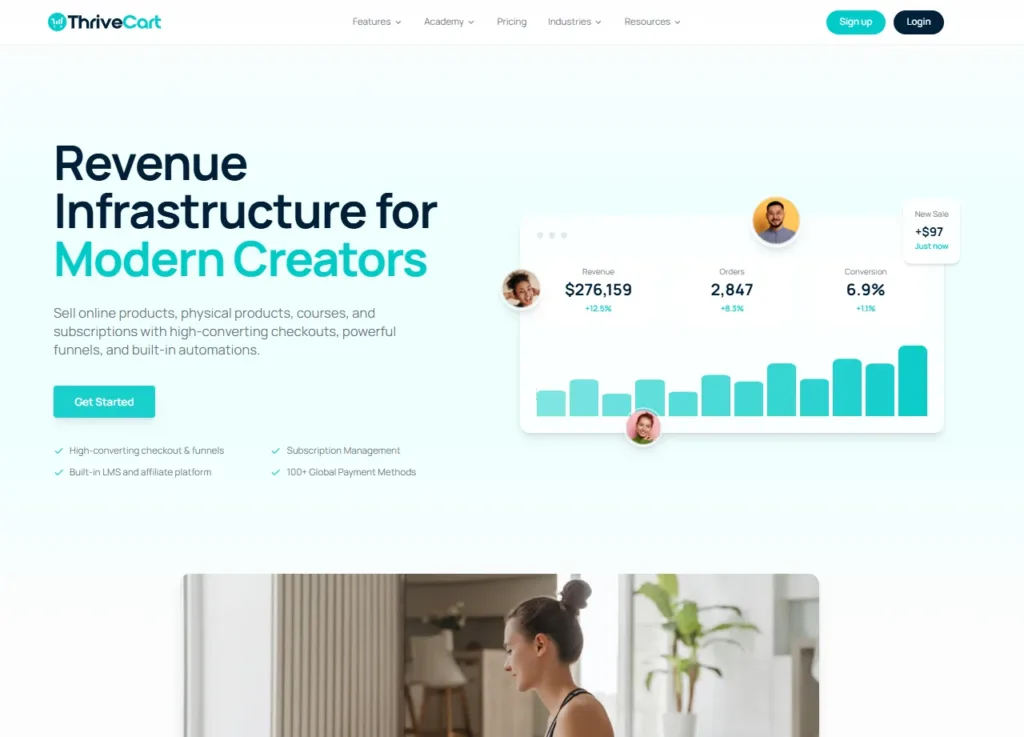
ThriveCart positions itself as the profit-maximizing platform for serious online businesses. Rather than focusing solely on funnel building, it prioritizes the entire revenue-generation process – from initial purchase through affiliate recruitment and course delivery.
Best for: Digital product sellers, course creators, and growth-minded or established online businesses seeking to maximize customer lifetime value while eliminating/reducing recurring software costs.
Key features:
- High-converting cart pages with advanced checkout optimization
- Built-in affiliate management center with real-time tracking (Pro+)
- One-click upsells, downsells, and order bumps
- ThriveCart Academy course and community platform
- Comprehensive analytics and conversion tracking
- Payment plan automation and dunning management (Pro+)
- Automated purchase triggers that sync with your email platform for hands-free customer segmentation
Pricing:
- ThriveCart Standard: $495 lifetime (one-time payment)
- ThriveCart Pro+: $790 ($495 lifetime + $295/year)
- ThriveCart Academy: $37-$97/month
Pros:
- Lifetime pricing on checkout/funnel eliminates recurring costs
- Exceptional checkout conversion rates
- Integrated affiliate management saves additional software costs
- Robust analytics for ongoing optimization
- Strong customer support and training resources
- Regular feature updates and improvements alongside a robust feature roadmap
- No transaction fees
Cons:
- Higher upfront investment compared to monthly plans
- Traditional funnel-building templates are on the current roadmap
- No built-in email marketing (this is coming in 2026); integrations with major providers are already available
ThriveCart’s strength lies in its focus on the money-making components of your funnel. While other platforms only emphasize landing page aesthetics, ThriveCart helps merchants create great-looking no-code pages plus it optimizes for actual revenue generation through superior checkout experiences and profit-maximizing features. With the launch of ThriveCart Academy in May 2026, ThriveCart has sharpened its focus on helping course creators make money by adding communities, quizzes, certificates and gamification.

2) ActiveCampaign – best for advanced email automation and funnels
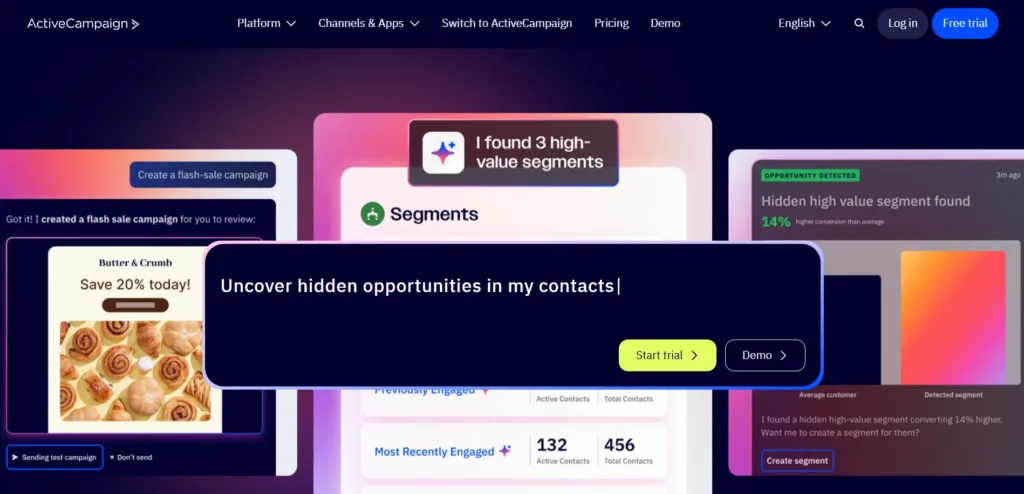
ActiveCampaign dominates the marketing automation space with sophisticated email workflows that integrate seamlessly with funnel building. Users consistently praise its automation builder as the most powerful in the industry, making it ideal for businesses prioritizing complex customer journeys.
Perfect for: Email-focused businesses requiring advanced automation, ecommerce companies with complex customer segmentation needs, and marketers who prioritize behavioral triggers over simple funnel templates.
Key features:
- Industry-leading automation builder with visual workflow design
- Advanced customer segmentation and behavioral tracking
- Landing page and form builder with A/B testing
- CRM functionality with deal tracking and lead scoring
- Predictive sending and content optimization
- SMS marketing integration
- Machine learning-powered recommendations
- Comprehensive analytics and attribution reporting
Pricing (as of 2026, billed annually, for 1,000 email & 5,000 WhatsApp contacts):
- Plus: starting at $112/month
- Pro: starting at $142/month
- Enterprise: starting at $284/month
- Starter (email only): $15/month (for up to 1,000 email contacts) up to $391/month (for up to 25,000 contacts)
Pros:
- Sophisticated automation capabilities
- Excellent email deliverability and reputation management
- Advanced segmentation allows precise, granular targeting
- Strong integration ecosystem with 900+ apps
- Powerful reporting and analytics
- Scales effectively with business growth
Cons:
- Steep learning curve for advanced automation features
- Landing page builder is less robust than dedicated funnel platforms
- Costs grow quickly as your contact list scales
- Can be overwhelming for simple email marketing needs
- Complicated, cluttered pricing structure
- Limited ecommerce features compared to specialized platforms
ActiveCampaign excels where simpler tools fall short – automation sophistication. Its automation builder lets you create intelligent, behavior-driven funnels that adapt to individual customer actions. For businesses serious about conversion optimization through email, it’s one of the best in the category.
👀📗➡️ RELATED READING TO DOWNLOAD TODAY | ‘The Skills Crisis Gold Rush: How to Turn Your Expertise Into a 6-Figure Education Empire‘
3) ClickFunnels – best for beginners and affiliate marketers
ClickFunnels pioneered the modern sales funnel software category and remains one of the most recognized names in the space. Its comprehensive template library and beginner-friendly interface make it a go-to choice for entrepreneurs new to funnel marketing.
Perfect for: Marketing beginners, affiliate marketers, and businesses that prioritize ease of use over advanced customization. Ideal for those who want extensive pre-built funnel templates and a large support community.
Key features:
- Extensive library of proven funnel templates across dozens of industries
- Drag-and-drop page builder with no coding required
- Built-in email marketing automation
- Membership site functionality
- A/B testing capabilities
- Affiliate management system
- Integration with major payment processors
- Comprehensive training resources and an active community (FunnelFlix)
Pricing (as of 2026):
- Launch: $97/month/$972/year
- Scale: $197/month/$1,968/year
- Optimize: $297/month/$2,976/year
- Dominate: $5,997/year (annual only)
Pros:
- Intuitive interface that’s genuinely friendly for beginners
- Massive template library across industries and funnel types
- Strong community and educational resources
- All-in-one approach reduces integration complexity
- Regular feature updates and improvements
Cons:
- Ongoing monthly costs add up fast – the Launch plan alone costs nearly $1k/year
- Limited customization compared to more specialized tools
- Page loading speeds can be slower than purpose-built alternatives
- Higher-tier features (e.g. unlimited custom domains, up to 20 courses, and priority/live chat support) locked behind expensive plans
- Basic analytics compared to dedicated platforms
ClickFunnels excels at simplifying the funnel creation process for newcomers. However, its subscription model becomes increasingly expensive as businesses scale. At $197/month for the Scale plan, you’d spend almost $2,000/year – compared to a one-time $495 for ThriveCart Standard or $790 one-time + $295/year for ThriveCart Pro+.
4) Convertri – best for lightning-fast page speed and flexible editing
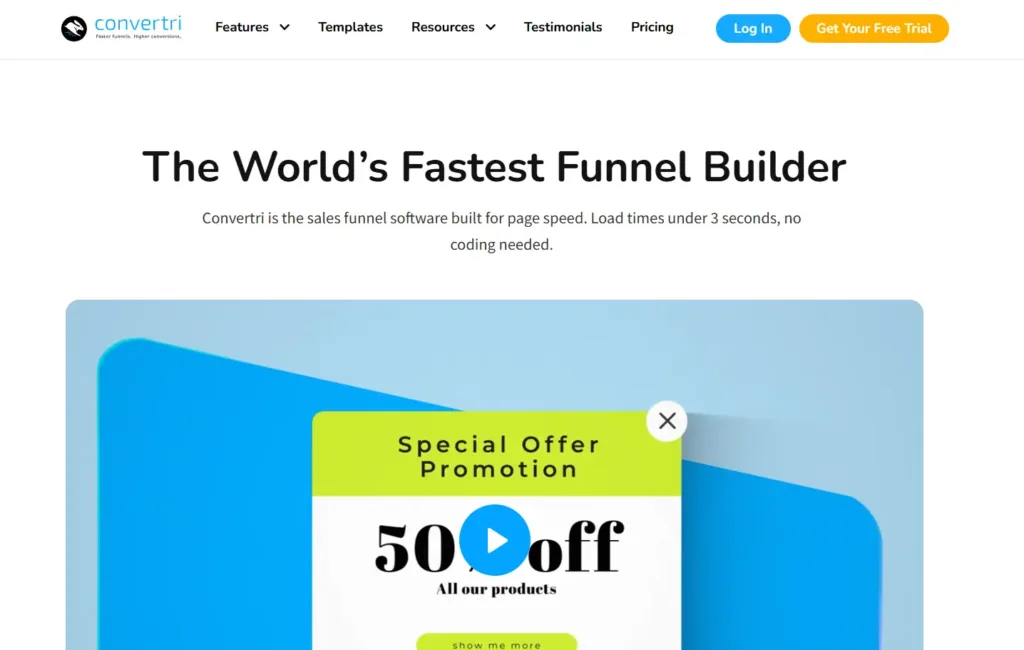
Convertri positions itself as the ultimate performance-driven funnel builder designed for speed-conscious marketers and agencies. Rather than trying to be a bloated all-in-one suite, Convertri focuses heavily on the frontend user experience – delivering near-instant page load times alongside unparalleled design freedom.
Perfect for: Performance marketers, direct-response advertisers, and digital agencies who prioritize page loading speed and unconstrained design flexibility over an all-in-one software suite.
Key features:
- True free-form drag-and-drop editor: no restrictive grids, columns, or rigid sections – place any element exactly where you want it
- Accelerated page technology that compiles pages into static, optimized assets for lightning-fast delivery
- Built-in shopping cart with one-click upsells, downsells, and multi-tier order bumps
- A/B split testing built directly into the platform
- Membership sites and subaccounts for client management
- Dynamic text replacement to tailor page copy to specific ad keywords
- Broad integrations with major email platforms and payment gateways
Pricing (as of 2026):
- Convert Plan: $99/month ($75/month billed annually)
- Scale Plan: $199/month ($133/month billed annually)
- Maximize Plan: $299/month ($199/month billed annually)
All plans include a 14-day free trial.
Pros:
- Accelerated page technology delivers consistently fast load times – directly boosting ad conversions and SEO performance
- Absolute positioning gives you pixel-perfect design freedom that grid-based builders simply can’t match
- Over 400 industry-specific, conversion-optimized templates ready to deploy
- Sub-account structure (Maximize plan) makes managing individual client campaigns straightforward
- Built-in membership features reduce the need for third-party tools
- Native order bumps and one-click upsells built right into the checkout flow
- Active user community and solid educational resources
Cons:
- Requires external integration for full email nurture sequences
- Reporting dashboards cover core data but stop short at deep enterprise-level conversion tracking
- Lacks the advanced dunning management and affiliate rules found in dedicated cart software like ThriveCart
- No built-in AI copywriting tools or deeply complex behavior-triggered automation workflows
Convertri research shows that 52% of mobile users will abandon a page that takes more than threeseconds to load, and a 1-second delay can reduce mobile conversions by 20%. The platform’s core strength is its relentless focus on load velocity – ensuring you don’t lose valuable traffic before visitors even see your offer.
👀➡️ SUCCESS IN ACTION | ‘The Freedom Formula: How Rob Cornish Turned Redundancy Into $41,000 a Month in Recurring Income‘
5) GetResponse – best for integrated email marketing
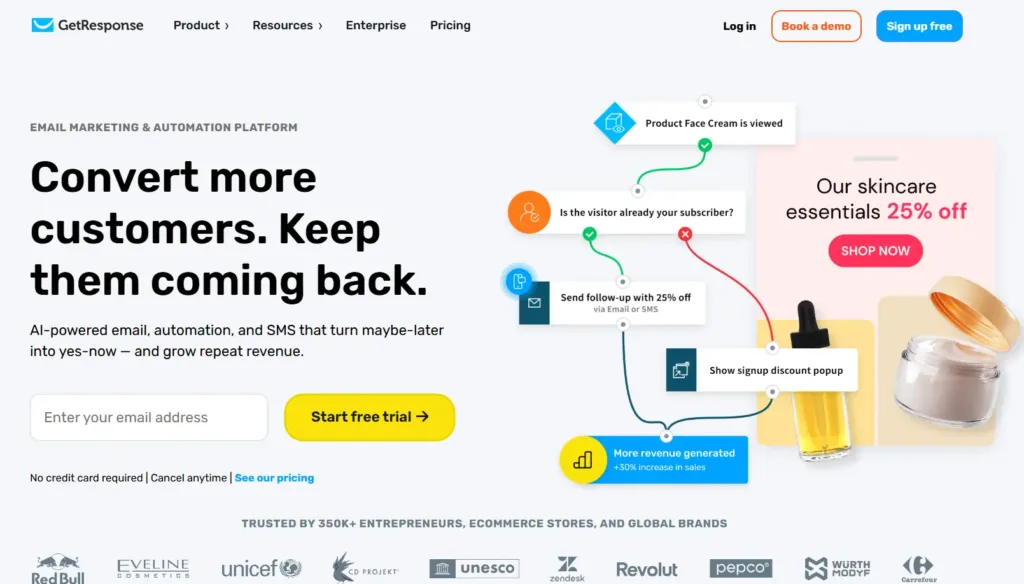
GetResponse evolved from a dedicated email marketing platform into a comprehensive marketing suite. It’s ideal for businesses that prioritize email automation and want funnel building as part of an existing email workflow, rather than as a standalone funnel-first tool.
Perfect for: Email-first marketers, businesses with extensive email automation needs, and companies seeking tight integration between their email campaigns and sales funnels.
Key features:
- Advanced email marketing automation with a visual workflow builder
- Landing page and funnel builder with conversion templates
- Webinar hosting and automation
- Ecommerce integration with abandoned cart sequences
- Marketing automation based on website behavior
- A/B testing for emails and landing pages
- CRM functionality with lead scoring
- Comprehensive analytics across email and funnel performance
Pricing (as of 2026, billed annually):
- Starter: $19/month
- Marketer: $36/month
- Creator: $41/month
Pros:
- Exceptional email deliverability and automation capabilities
- Seamless integration between email campaigns and funnels
- Strong webinar marketing features
- Comprehensive behavioral tracking and segmentation
- Affordable entry-level pricing
- Extensive template library for emails and pages
Cons:
- Funnel building features are less advanced than specialized platforms
- Limited checkout and cart optimization capabilities (no native cart support)
- Higher-tier plans required for advanced funnel features
- Less focused on conversion optimization compared to dedicated funnel builders
- Basic affiliate management compared to specialized tools
GetResponse works best for businesses where email marketing drives the majority of conversions and funnels serve as lead capture mechanisms. Companies focused on maximizing checkout conversions and customer lifetime value will find its commerce features lacking compared to platforms like ThriveCart.
6) HighLevel – best for agencies and white-label solutions
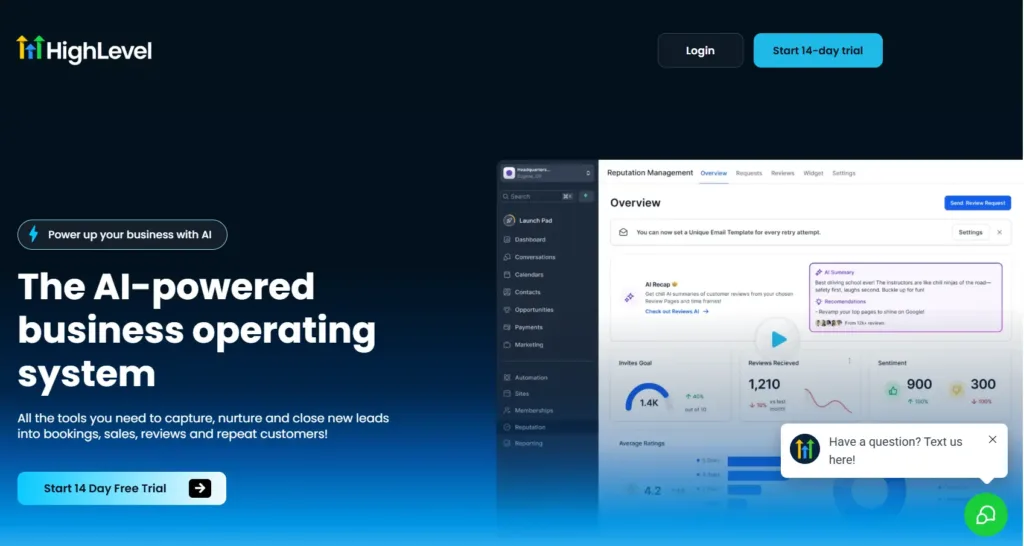
HighLevel has rapidly emerged as a top choice for digital marketing agencies seeking comprehensive client management solutions. Its unique white-label capabilities and agency-focused features distinguish it from traditional funnel builders.
Perfect for: Digital marketing agencies, consultants managing multiple clients, and businesses seeking complete CRM integration with funnel-building capabilities under one platform.
Key features:
- Complete CRM with pipeline management and lead tracking
- Drag-and-drop funnel builder with conversion-optimized templates
- White-label platform for full rebranding and reselling to clients
- Built-in appointment scheduling and calendar management
- SMS and email marketing automation
- Two-way communication hub for client interactions
- Reputation management and review automation
- Comprehensive reporting across all client accounts
Pricing (as of 2026):
- Starter: $97/month or $970/year
- Unlimited: $297/month or $2,970/year
- Agency Pro (white-label): $497/month or $4,970/year
All plans include a 14-day free trial.
Pros:
- True all-in-one solution that reduces software stack complexity
- White-label capabilities create additional revenue streams for agencies
- Strong CRM functionality integrated with funnel building
- Good value considering the breadth of features
- Agency-focused tools for managing multiple clients
- Active community and regular feature updates
Cons:
- Steeper learning curve due to the extensive feature set
- Interface can feel cluttered for simple funnel needs
- Email deliverability concerns reported by some users
- Higher monthly costs compared to specialized tools
- Overkill for individual entrepreneurs or small businesses
- No native checkout or revenue-optimized sales pages
HighLevel’s strength lies in its comprehensive approach to client management combined with funnel building. For agencies, getting CRM, funnel builder, email marketing, and client communication tools in one place – for less than most businesses spend on individual specialized platforms – is a compelling value proposition.
👀➡️ READ AN EMAIL MARKETING SUCCESS STORY | ‘Proof That Low Ticket Works: How Liz Wilcox Hit Nearly $2 Million With a $9 Membership and ThriveCart‘
7) Kartra – best for agency and done-for-you services
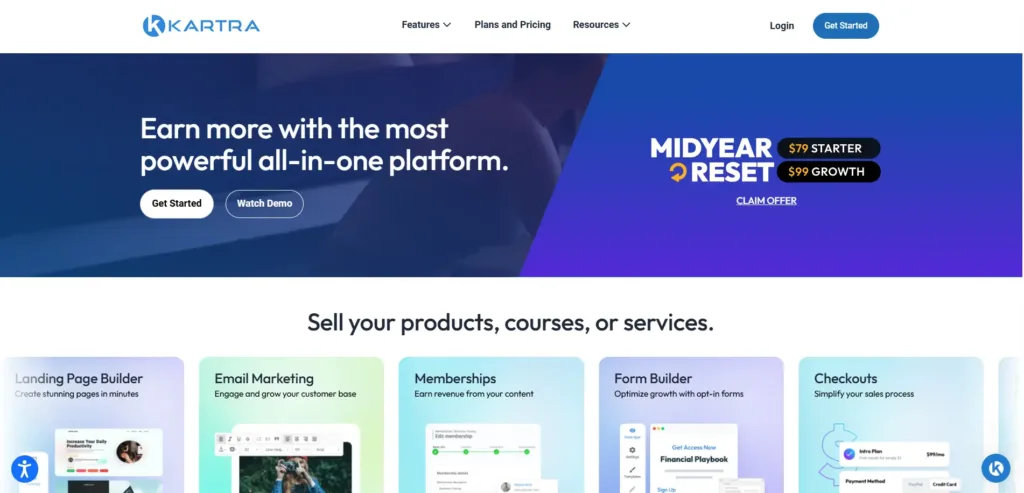
Kartra positions itself as the most comprehensive all-in-one marketing platform, offering extensive functionality that appeals to agencies and businesses requiring sophisticated automation workflows. Its depth comes with complexity that suits experienced marketers more than beginners.
Perfect for: Digital marketing agencies, businesses with complex customer journeys, and experienced marketers who need advanced automation capabilities and don’t mind a steeper learning curve.
Key features:
- Complete funnel builder with advanced page customization
- Built-in email marketing with behavioral automation
- Video hosting and marketing tools
- Membership site and course creation platform
- Advanced affiliate management system
- Help desk and customer support tools
- Calendar booking and appointment scheduling
- Comprehensive analytics and reporting dashboard
Pricing (as of 2026):
- Essentials: $59/month ($52/month billed annually)
- Starter: $119/month ($99/month billed annually)
- Growth: $229/month ($189/month billed annually)
Pros:
- All-in-one solution that reduces integration needs
- Advanced automation capabilities for complex workflows
- Comprehensive video marketing tools
- Robust affiliate and customer management features
- Detailed analytics across all business functions
- Strong customer support and training resources
Cons:
- Steep learning curve requiring significant time investment
- Higher monthly costs compared to specialized tools, plus transaction fees
- Interface complexity can overwhelm new users
- Slower page loading speeds due to feature density
- Possible feature overkill for simple business models or solo creators
- Limits for selling courses, memberships, and products
Kartra’s comprehensive approach makes it powerful for agencies managing multiple client accounts or businesses with complex customer journeys. However, its $624/year starting cost on annual billing comes with some significant limitations: 5% transaction fees, only one membership or course, and only one product. Some users have also reported that the significant learning curve makes it unsuitable for most small businesses or entrepreneurs seeking a simple, effective funnel solution.
8) Leadpages – best for landing pages and lead generation
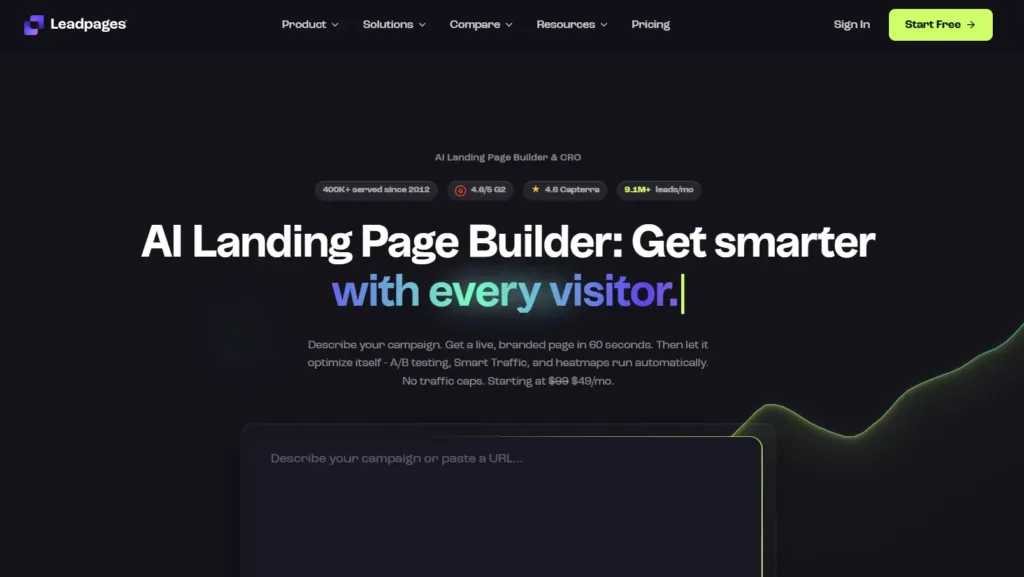
Leadpages specializes in the top of the funnel, excelling at creating high-converting landing pages and lead capture systems. While it’s not a complete sales funnel solution, it dominates the lead generation space with superior page optimization tools.
Perfect for: Businesses focused primarily on lead generation, service providers building email lists, and companies with existing checkout systems that need better landing page performance.
Key features:
- Advanced landing page builder with conversion-focused templates
- Leadboxes (pop-ups and alert bars) for lead capture
- A/B testing with statistical significance reporting
- Facebook and Instagram ad integration
- Lead magnets and opt-in form optimization
- Basic email integration and follow-up sequences
- Mobile-responsive design automation
- Conversion analytics and heat mapping
Pricing (as of 2026):
- Starter: $8/month (billed annually) – for beginners, 1 custom domain, up to 50 pages
- Pro: $23/month (billed annually)
- Business: $39/month (billed annually)
- Grow: $79/month (billed annually)
- Optimize: $159/month (billed annually)
- Scale: $319/month (billed annually) – for agencies/large enterprise
All plans include a 7-day free trial.
Pros:
- Superior landing page conversion rates
- Extensive template library optimized for lead capture
- Robust A/B testing capabilities
- Strong integration with major email platforms
- Excellent mobile optimization
Cons:
- Limited sales funnel functionality beyond lead capture
- No built-in checkout or ecommerce features
- Requires separate tools for cart, payment processing, and post-purchase automation
- Less suitable for complete funnel automation
- Limited upsell and cross-sell capabilities
Leadpages excels at the awareness and interest stages of the customer journey but falls short at the decision and action phases. Businesses using it typically need additional tools for checkout, payment processing, and post-purchase automation – which increases overall complexity and cost.
👀➡️ YOU MIGHT ALSO LIKE | ‘24 Profitable Digital Products to Sell (And the Best Platform to Sell Them On)‘
9) Podia – best for course creators and digital educators

Podia has emerged as a preferred all-in-one platform for online educators who need course delivery combined with basic funnel building capabilities. Its creator-focused approach eliminates the complexity of managing separate platforms for course hosting, sales pages, and customer management.
Perfect for: Online course creators, digital educators, coaches, and content creators who prioritize simplicity and want course delivery integrated with their sales process.
Key features:
- Course creation and hosting platform
- Built-in sales page and checkout functionality
- Email marketing tools with automation sequences
- Membership site capabilities with drip content
- Affiliate program management for course promotion
- Basic funnel templates optimized for digital products
- Student messaging and community features
- Integrated analytics for course and sales performance
Pricing (as of 2026, billed annually):
- Mover: $42/month
- Shaker: $84/month
- Earthquaker: $150/month
Pros:
- Seamless integration between course delivery and sales funnels
- No transaction fees on higher-tier plans
- Intuitive interface designed specifically for creators
- Strong customer support and creator community
- Affordable compared to running separate course and funnel platforms
Cons:
- 5% transaction fee on the Mover plan
- Limited funnel building flexibility compared to specialized platforms
- Basic email marketing versus dedicated platforms
- Fewer advanced automation options
- Less suitable for businesses selling anything beyond courses or memberships
- Smaller template library than funnel-focused competitors
Podia users consistently praise its simplicity and creator-focused design. For educators who want to focus on teaching rather than technical complexity, Podia provides the essential funnel functionality without overwhelming features.
10) SamCart – best for ecommerce and physical products
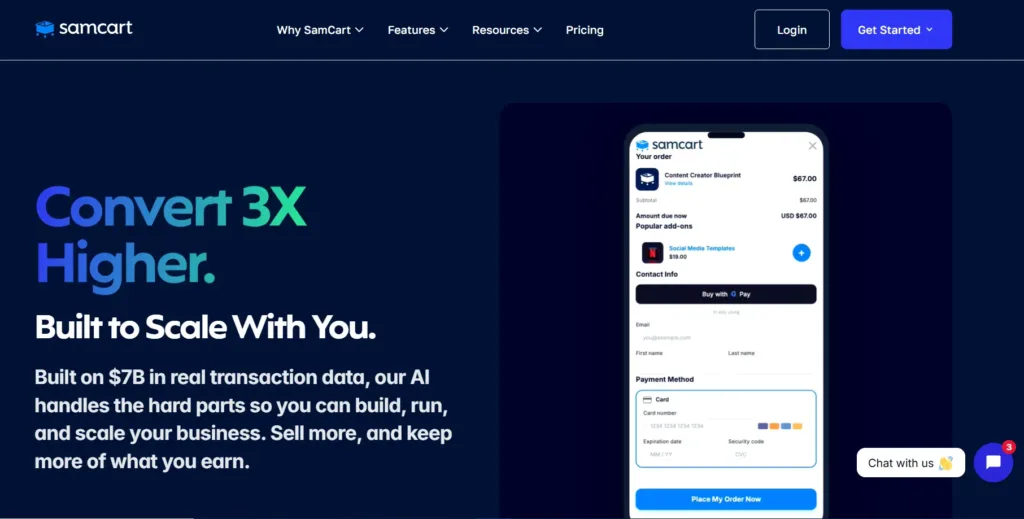
SamCart focuses specifically on checkout optimization and cart functionality. Its ecommerce features and physical product handling capabilities might make it appealing to businesses selling tangible goods alongside digital products.
If SamCart is on your shortlist, review the strongest SamCart alternative options before you commit.
Perfect for: Ecommerce businesses, physical product sellers, and companies that prioritize checkout conversion optimization over comprehensive funnel building.
Key features:
- High-converting checkout pages with multiple design templates
- One-click upsells and order bump functionality
- Advanced payment plan and subscription management
- Inventory tracking for physical products
- Abandoned cart recovery automation
- A/B testing for checkout pages
- Affiliate tracking and commission management
- Integration with major shipping and fulfillment services
Pricing (as of 2026):
- Core: $79/month ($59/month billed annually)
- Pro: $199/month ($149/month billed annually)
- Enterprise: custom pricing
Pros:
- Specialized checkout optimization expertise
- Strong ecommerce and inventory management features
- Excellent conversion rates for cart abandonment recovery
- Robust payment processing and subscription handling
- Good integration with shipping and fulfillment platforms
Cons:
- Limited funnel building capabilities beyond checkout
- Requires separate tools for landing pages and email marketing
- Higher monthly costs compared to lifetime alternatives
- Pricing scales significantly with business growth
Like ThriveCart, SamCart excels at what it does – optimizing the final conversion step – but requires additional tools for complete funnel functionality. At $199/month for the Pro plan, that’s $2,388/year compared to ThriveCart’s one-time $495 Standard lifetime license or $790 ($495 lifetime + $295/year) for Pro+.
11) Systeme.io – best all-in-one free option
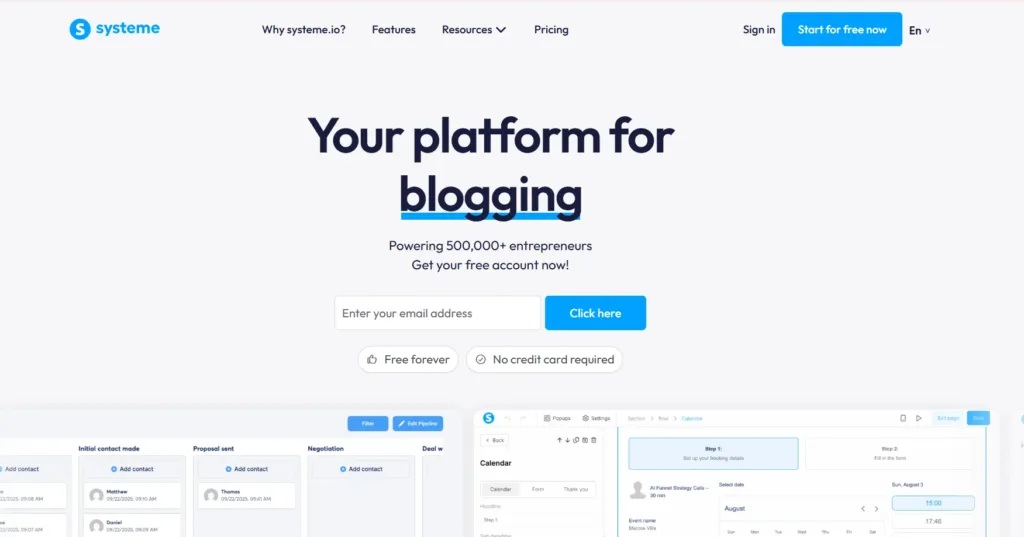
Systeme.io offers the most comprehensive free plan in the sales funnel software space, making it an attractive entry point for bootstrapped entrepreneurs and those testing funnel concepts before committing to a premium platform.
Perfect for: Startups with limited budgets, solopreneurs testing business concepts, and small businesses needing basic funnel functionality without upfront investment.
Key features:
- Complete funnel builder with drag-and-drop editor
- Email marketing automation with unlimited emails
- Membership site and course creation tools
- Affiliate program management
- Blog and website builder
- Basic ecommerce functionality
- Webinar hosting capabilities
- Simple A/B testing tools
Pricing (2026, billed annually):
- Free plan: $0 (up to 2,000 contacts, 3 sales funnels)
- Startup: $170/year (5,000 contacts, up to 10 funnels)
- Webinar: $470/year (10,000 contacts, up to 50 funnels)
- Enterprise: $970/year (unlimited access)
Pros:
- Genuinely useful free plan with core features – not just a stripped-down trial
- Affordable paid tiers for growing businesses
- All-in-one approach reduces tool complexity
- Simple interface that’s ideal for beginners
- Regular feature additions and improvements
Cons:
- Limited design customization options
- Fewer integrations compared to established platforms
- Basic analytics and reporting
- Free plan restrictions force upgrades quickly as you grow
- Smaller community and fewer learning resources
- Limited advanced automation features
Systeme.io’s free plan provides genuine value for testing funnel concepts, but most serious businesses outgrow its limitations within months. The 2,000 contact limit and 3-funnel restriction mean successful users inevitably need to upgrade – making it more of a starter platform than a long-term solution for scaling businesses.
👀📗➡️ RELATED READING TO DOWNLOAD TODAY | ‘Building a Thriving Business in the $6.3 Trillion Health & Wellness Market‘
Honorable mention: HubSpot – enterprise CRM with funnel capabilities
HubSpot deserves recognition as a comprehensive business growth platform that includes sales funnel functionality within its broader CRM ecosystem. It’s not a dedicated funnel builder, but its enterprise-grade features could make it worth considering for larger organizations.
Perfect for: Enterprise businesses, B2B companies with complex sales cycles, and organizations that need comprehensive CRM integration with their marketing funnels.
Key strengths:
- Free tier with core CRM features
- Robust reporting and analytics
- Extensive integration ecosystem
- Enterprise-level security and compliance
HubSpot excels at managing existing customer relationships and complex B2B sales processes, but it lacks the conversion-focused optimization features that dedicated funnel platforms like ThriveCart provide. Its complexity and cost structure make it less suitable for straightforward ecommerce or digital product sales funnels.
How to build your first simple (and profitable) sales funnel
Building your first sales funnel doesn’t require complex software or extensive marketing experience. A profitable funnel follows three fundamental steps that convert visitors into customers systematically.
Step 1: Create a compelling lead magnet
Start with something genuinely valuable that solves a specific problem for your target audience. Effective lead magnets include:
- PDF guides and checklists
- Templates or swipe files
- Mini-courses or video tutorials
- Free tools or calculators
The key is specificity – “5 email templates that convert cold leads” performs better than “email marketing guide.” Your lead magnet should take 10-15 minutes to consume and leave people wanting more.
Step 2: Build a simple two-page funnel
You only need two pages to start:
- Opt-in page: One objective – capturing email addresses. A compelling headline, clear benefit statements, and a simple form. Remove navigation menus and distractions that might pull visitors away from the conversion goal.
- Thank you/sales page: Deliver the promised lead magnet immediately, then introduce your paid offer as a natural next step. Acknowledge their interest, provide instant access to the free content, and present one clear call to action.
Step 3: Drive targeted traffic
Start with organic traffic before investing in paid advertising:
- Share your lead magnet in relevant online communities and forums
- Post about it across your social media platforms
- Use content marketing and SEO to attract search traffic
- Explore guest posting, podcast appearances, and strategic partnerships
Once you’ve validated that your funnel converts visitors into leads and leads into customers, scale with paid traffic – Facebook ads, Google ads, or influencer partnerships.
Most successful entrepreneurs start with this simple framework, then add complexity as they identify optimization opportunities. The goal is a profitable system first, elaborate multi-step sequences second.
👀➡️ EXPLORE MORE | ‘From Passion Project to $1 Million in a Year: How Chris Huntley Built a Recurring Revenue Empire With ThriveCart‘