
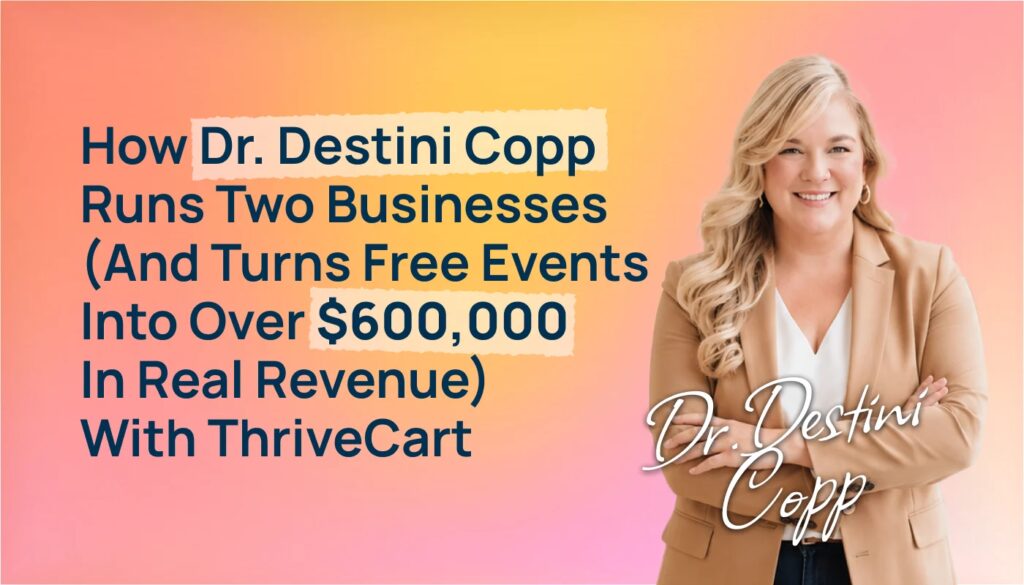

Dr. Destini Copp has spent more than 25 years in marketing. She teaches in an MBA program. She’s led a remote team of 1,000+ people in corporate America. So when she tells you that order bumps and upsells are the single best thing she’s found for growing revenue, it’s worth listening.
Destini runs two very different brands. HobbyScool is her business-to-consumer brand. It runs free online summits for hobbyists – think watercolor painting, card making, quilting, and art journaling. Creator’s MBA is her personal brand, and it helps digital product creators build steady, recurring income. Two different businesses with two very different audiences – but the same playbook behind both, built and run entirely on ThriveCart.
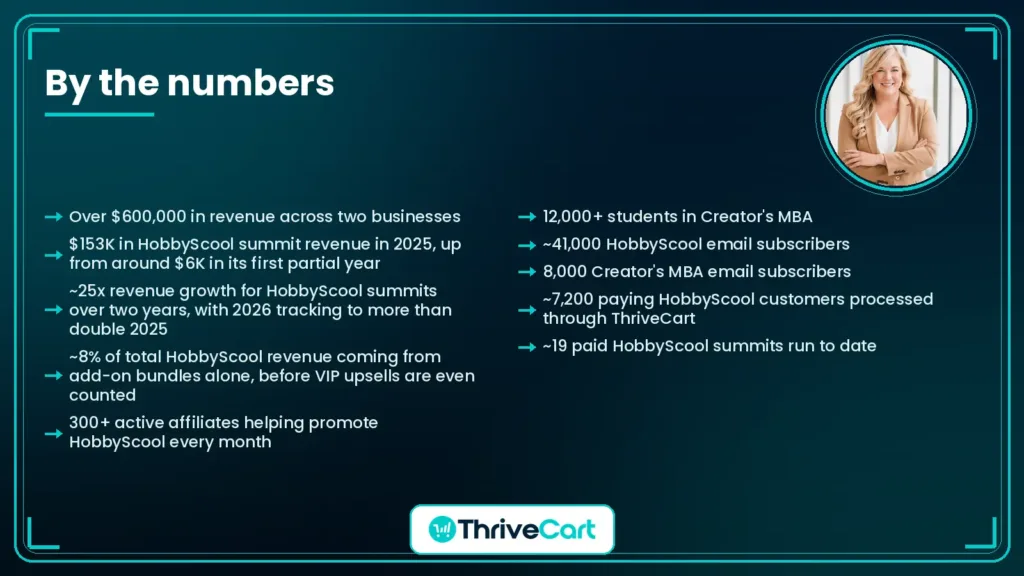
Today, she’s a six-figure seller who’s brought in over $600,000 through ThriveCart across both businesses. And the story of how she got there says a lot about the quiet power of a well-built checkout.
The moment order bumps and upsells changed everything
 If there’s one idea running through Destini’s whole story, it’s this: the checkout page isn’t the end of the sale. It’s the start of the next one.
“The biggest thing here was discovering order bumps and upsells to increase average order value in ThriveCart,” Destini says. “Once I started including those into my checkouts, average order value went up on every launch.”
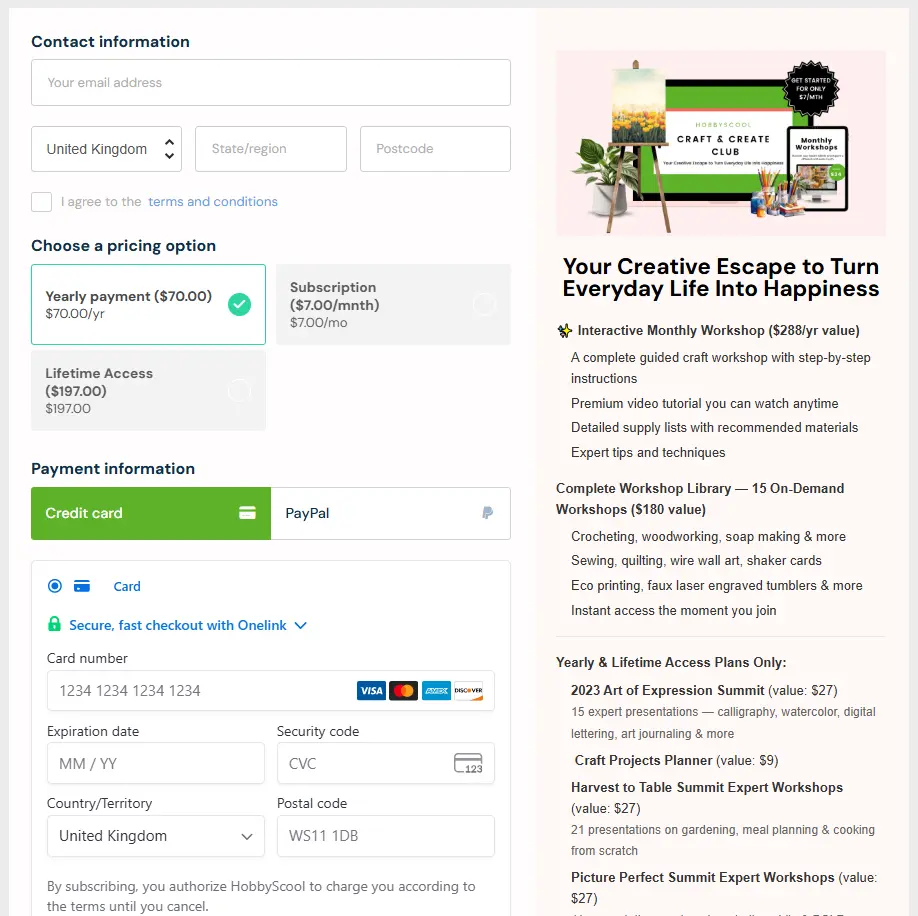
Here’s what that looks like in a typical HobbyScool funnel. Someone signs up for the free event on a landing page. The next page they see is the VIP pass sales page. If they buy, they land on a ThriveCart checkout with an order bump, then an upsell for the previous year’s workshops from that same event, then a second upsell for the Craft & Create Club membership.
“For the B2C audience, I’m only doing one order bump there, just to make it clear and easy for them,” she explains. “Generally, I’ll have an upsell there that sells the previous year’s workshop, and that always does very well.”
The numbers back it up. Add-on bundles alone now make up around 8% of HobbyScool’s total revenue, and that’s before you even count the VIP upsells stacked on top. Summit revenue has grown from about $6,000 in HobbyScool’s first partial year to $153,000 in 2025 – roughly 25 times growth in two years – and 2026 is tracking to more than double that figure.
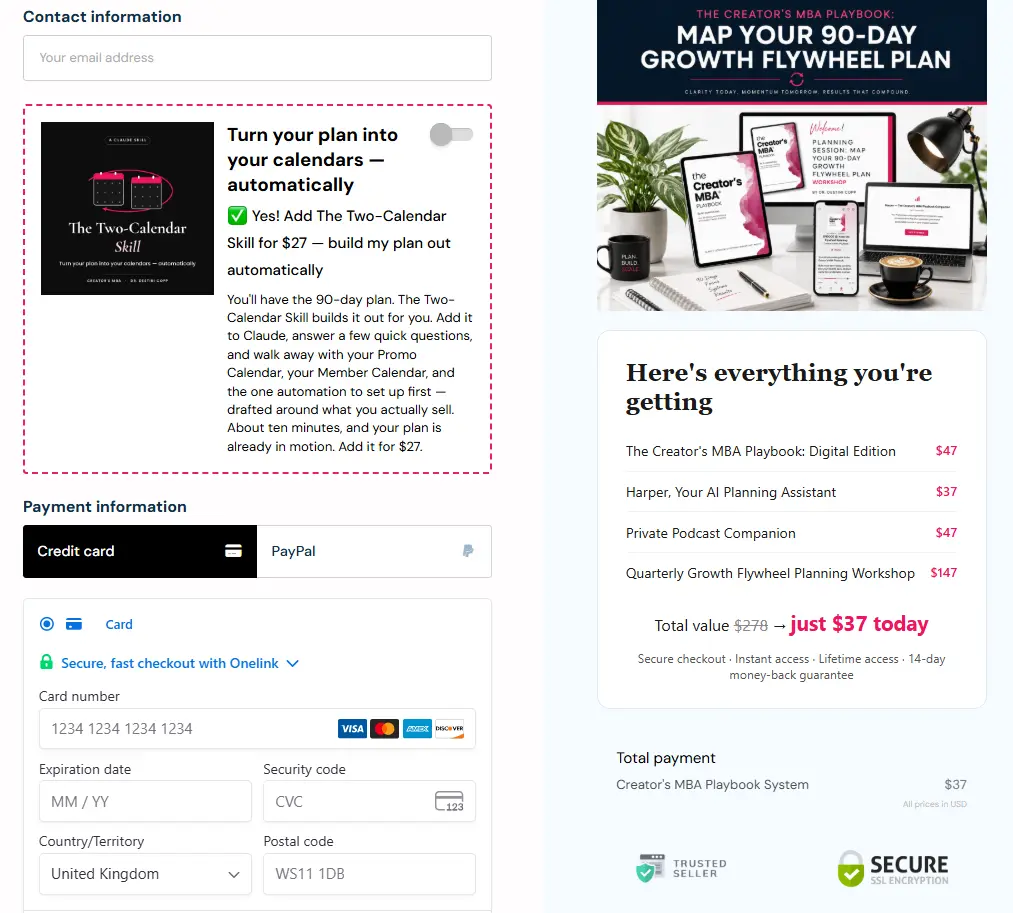
Over on the Creator’s MBA side, the same basic structure shows up with a few more layers, since it’s a higher-touch, business-to-business audience. “For some events in my B2B brand, I might do multiple funnel offers,” Destini says. One recent example: her “Beyond the PDF” event funnel includes a free registration page, a VIP upgrade, an order bump, an upsell for lifetime access to her Newsletter Profit Club, and even a downsell to a monthly plan if someone says no to lifetime.
It’s a simple structure repeated everywhere: a free entry point, one clear upgrade, then a couple of relevant offers stacked right after the sale. And it works because every offer in that sequence makes sense for where the customer already is – not because there are more offers thrown at them.
YOU MIGHT ALSO LIKE → | ‘How to Build a High-Converting Sales Funnel in ThriveCart (Quick Step-By-Step Guide)‘
Running two businesses without doubling the work
Before ThriveCart, Destini ran everything on Kajabi, but it wasn’t built for the kind of customer journey she wanted to create, she says. “With Kajabi, it was very difficult to do the upsells and all of that,” she says. “When I switched over to ThriveCart, I saw an immediate bump in the revenue from just being able to take people from a free lead magnet or free event, to the tripwire, to the order bumps and upsells. It made a huge, huge difference.”
She’s also found a way to build new funnels fast. She uses Claude to write her marketing copy and course pages in HTML, then drops that straight into ThriveCart. “I had these funnels set up in no time,” she says. “I just take the HTML, upload it into ThriveCart, and hit publish. I’m done.” It’s a workflow she’s trained her team to run without her, which has freed her up to spend more time on Creator’s MBA. “Because I’ve shifted my focus, I’ve had some of the best couple months in my personal brand that I’ve had in a long time,” she says.
→ THE POWER OF RECURRING REVENUE | ‘From 9-Hour Call Days to $60K Passive Months: Melanie Aubert’s ThriveCart Story‘

The framework behind it all
Creator’s MBA is built around what Destini calls the Creator Growth Flywheel: attract, engage, nurture, retain, advocate. It comes straight from her academic research, but it’s been tested and proven through her own two businesses.
“Once they sign up for your lead magnet, on the next page have some type of easy, lower-ticket offer for them to say yes to, and then build out your ThriveCart funnel from there,” she explains. “Have your order bump on the checkout page. Make sure you’ve got an upsell and downsell in each funnel.”
The retain and advocate stages are where the flywheel really pays off. “In HobbyScool, we have 300+ affiliates that are engaged and actually help us sell our events every single month,” she says. “A big component for us is testimonials. After an event in HobbyScool, we can get 30-50 testimonials just from that one event. That advocacy stage is very important, because those testimonials become marketing content that fuels the attract stage. When people are telling other people about you, it makes that attract stage so much easier,” she says.
→ RECOMMENDED READING | ‘Proof That Low Ticket Works: How Liz Wilcox Hit Nearly $2 Million With a $9 Membership and ThriveCart‘
Destini’s advice for fellow creators and coaches
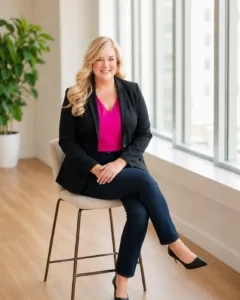 If someone came to Destini today wanting to build something similar, her advice starts well before any platform decision.
“Start your email list,” she says. “A lot of people go start on Instagram or TikTok and think, ‘Okay, I’m building my audience.’ No, you’re not. We’ve worked with creators, even in HobbyScool, that have hundreds of thousands of people on Instagram. They have trouble selling. It’s not the same as someone actually signing up for your email list.”
Once people are on that list, she says the next move is to test, not guess. “I don’t think anyone knows what’s actually going to land with people until you start testing it,” she says. “Once you get people into your world, test out different things, see what they’re reacting to, then get that funnel and checkout set up.”
She also doesn’t recommend spreading yourself across two brands, especially when starting out. “For most people out there, I would recommend that you focus on one thing,” she says. “I get bored very easily and I just wanted to try new things. But if I had to go back, I would say focus on one thing and go all in on it.” That said, she’s quick to add that running two brands has worked for her mostly because of skills she built managing large teams earlier in her career – something she doesn’t assume everyone will have.
→ EXPLORE MORE | ‘The Freedom Formula: How Rob Cornish Turned Redundancy Into $41,000 a Month in Recurring Income‘
