
Looking to start your own digital product business in 2026? You’re in the right place! A digital product business sells downloadable or access-based goods – courses, ebooks, templates, memberships, audio, or software – with no inventory, shipping, or per-unit cost. Margins typically run 80-95%, and a single product can serve unlimited buyers. The trade-off is upfront creation effort and the marketing required to drive consistent demand.
If you’re thinking of launching your own digital product business, here’s a sobering statistic: according to Harvard Business School research, over 30,000 new products launch every year (good news!) – yet a staggering 95% of them fail. Ouch!
No one wants to land in that dreaded 95% – nor should you have to. If you want to build a profitable digital products business but don’t know where to start, we’re breaking down the 35 mini-lessons that cover everything from validation and pricing strategy to customer psychology and product delivery.
ThriveCart merchant and business coach Kamila von Retteg has made over $3 million selling digital products – and she’s learned these lessons the hard way so you don’t have to. Whether you’re just getting started in the creator economy or looking to scale your existing digital product business, these tactical insights could save you months of wasted time and thousands of dollars in mistakes.
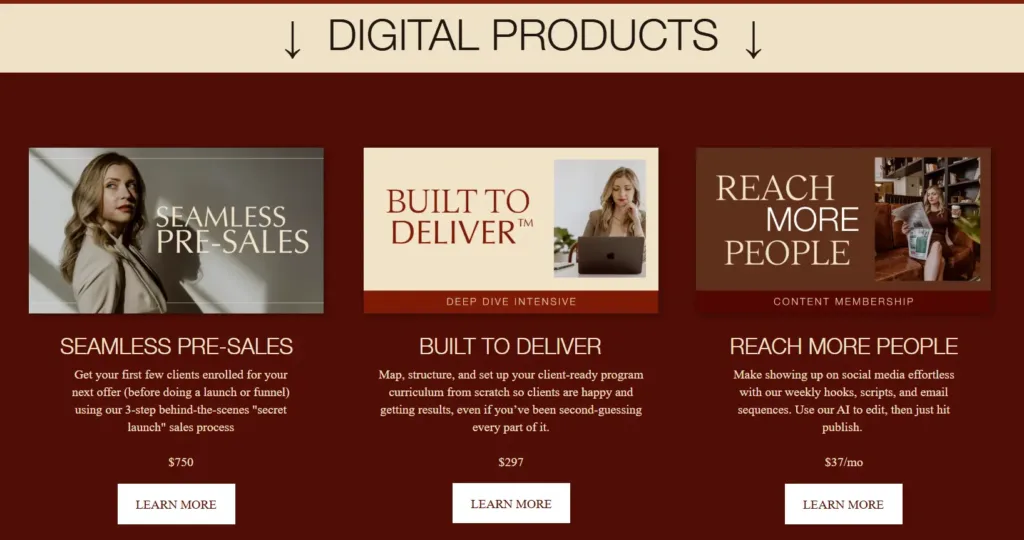
To make it easier, we’ve also grouped the mini-lessons into several categories covering:
- Product development and validation
- Positioning strategy
- Marketing
- Pricing
- Online course creation
- Sales psychology
- Social proof
- Customer support
- Creating sales funnels
- Pre-launch and launch plans
- And more
Short on time? Watch Kamila explain how to sell your first digital product in just 72 hours.
Validation & Product Development
1) Should I build my digital product before validating it?
This is the most expensive mistake new creators make. Getting excited about an idea and spending weeks (or months) building the “perfect product” only to launch to crickets is devastating – but completely avoidable.
The data is sobering. According to CB Insights’ analysis of over 100 startup post-mortems, 43% of startups fail because there was no real market need for their product. Meanwhile, research shows that validated business ideas have a 60-70% success rate compared to just 10-20% for unvalidated ideas – meaning proper validation reduces your failure risk by 3-4x.
Action step: Before investing significant time in creation, find 10 people who say they would actually buy what you’re planning to make. Have real conversations. Get commitments. Only then should you invest the time to build it.
The difference between a 20% chance of success and a 70% chance of success? Validation. It’s not optional – it’s the foundation of a sustainable digital products business.
2) Is pre-selling a digital product a good idea?
There’s often a stigma around pre-selling – asking people to pay for something that doesn’t exist yet. But pre-selling is actually the smartest way to validate an idea and fund its creation simultaneously.
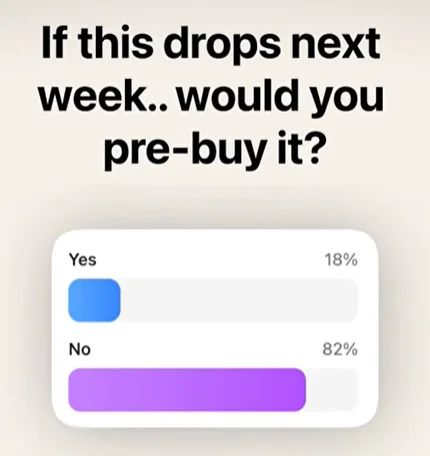
The reality: If people won’t pre-buy it, they probably won’t buy it after you’ve spent months building it either. Pre-selling gives you market validation, cashflow, and early customer feedback that shapes a better final product.
→ PRE-SELL THE SMART WAY. DISCOVER HOW ONE CREATOR DOES IT | ‘From Burnout to $3 Million: How a Photographer Quit Her Camera and Built a Coaching Empire With ThriveCart’
3) How important is my product page’s headline?
You can have the most beautiful sales page with perfect copy and stunning graphics, but if your headline doesn’t immediately communicate the outcome, no one’s reading past it.
The 80/20 rule: Spend 80% of your time crafting a compelling headline and 20% on everything else. Your headline should answer questions such as: What is this? What will I achieve? Why should I care – right now?
Clarity in marketing
4) Is a creative hook better than a clear one?
Many new creators think they need to be clever with their product marketing – cute metaphors, creative angles, poetic language. But the stuff that actually sells is straightforward and clear.
Here’s an example comparison:
❌ Low-converting headline: “Unlock the secret garden of audience alchemy”
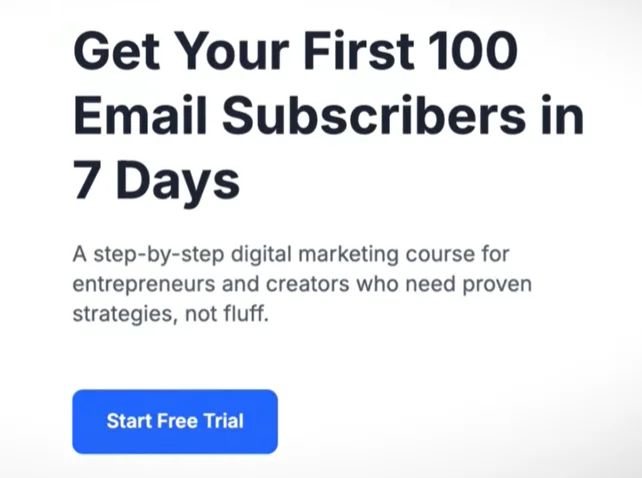
✅ High-converting headline: “Learn how to get your first 100 email subscribers in 7 days”
When it comes to conversions, simple and boring beats clever and gimmicky. Save the creativity for your content; use crystal-clear clarity for your marketing.
5) What’s known to harm digital product sales?
Confusion is a silent killer of sales. If someone lands on your page and has to think for more than three seconds about what you’re offering and who it’s for, they’re as good as gone.
Every element of your offer should answer:
- What is this?
- Who is this for?
- What do I get?
- What’s in it for me?
Remove ambiguity at every touchpoint in your customer journey.
Stick to the 40% rule: The 40% Rule, or Sean Ellis Test, is a survey-based, qualitative test used as a validation metric for startups. It states that if 40% or more of users say they would be “very disappointed” if they could no longer use your product, you’ve achieved Product-Market Fit (PMF). In other words, it’s an excellent indicator that your product or service is a “must-have” rather than a “nice-to-have”.
→ YOU MIGHT ALSO LIKE | ‘How to Price Your Online Course (And Stop Leaving Money on the Table)‘
Pricing strategy for digital products
6) How do I price a digital product?
When you’re starting out, it’s tempting to think pricing is just about covering costs and making a profit. But price signals value to your market.
A $10 product and a $100 product solving the same problem are perceived completely differently. Price strategically based on the transformation you provide, not randomly based on production costs.
7) Will raising my product’s prices get me more money?
Just because you can charge more doesn’t mean you should. If you double your price but lose 70% of your buyers, you’ve made less money and worked harder for it.
Action step: Test your pricing systematically. Understand your market’s willingness to pay before making dramatic changes. Small price tests (10-20% increases) can reveal optimal pricing without risking major revenue loss.
Product positioning strategy
8) What should a digital product do for customers?
Your product should solve a problem people are actively aware of and searching for a solution to. If you have to educate them on why they even have the problem first, you’re making your job 10 times harder.
Strategy: Find the problem they’re already researching. Use keyword research tools and social listening to discover the exact language your audience uses when describing their pain points. Need an example? Here’s how one marketer spotted a need, then leveraged it into a nearly $5,000 lead magnet.
9) Should you add more or less content to the product to give it value?
Many creators think adding more content makes their products more valuable, so they cram in extra modules, bonus PDFs, and supplementary videos. But all this does is overwhelm people.
The truth: Value is solving a problem completely and clearly – not giving them 47 different ways to solve it. Focus on the most direct path to transformation.
Online course creation tips
10) Do course completion rates matter more than course length?
If only 10% of people finish your course, it doesn’t matter how comprehensive it is. A short, focused product that 80% of people complete and get results from is infinitely more valuable than a massive course nobody finishes.
Design principle: Design for completion, not comprehensiveness. Remove the “nice to have” content and keep only what’s essential for the transformation you promised.
→ LOW COURSE COMPLETION RATES? SOLVE IT WITH COMMUNITIES | ‘10 Best Practices for Building a Creator-Led Community That People Actually Stick Around For‘
11) What’s a good strategy to build trust in a digital product business?
Promising someone they’ll make $10,000 in 10 days sounds great, but it’s also hard to believe. Promising they’ll get their first paying client in seven days is far more believable and achievable.
Psychology principle: Small wins create momentum and build trust. Once someone achieves that first small win with your product, they’re more likely to continue engaging and recommend you to others.

Sales psychology & copywriting
12) What are the best practices for creating sales pages?
The best sales copy doesn’t introduce new ideas. It articulates what your ideal customer is already feeling and thinking but hasn’t been able to put into words.
The reaction you want: “Yes, that’s exactly me. This person actually gets me.” This creates instant rapport and reduces resistance to the sale.
→ JUST FOR YOU | ‘4 Thank-You Page Examples to Help You Increase Sales & Conversions‘
13) How important is social proof for a digital product business?
If someone already knows you, trusts you, and has consumed your content, they’ll buy with minimal convincing. But if they’ve never heard of you, they need testimonials, case studies, and proof that this actually works.
Strategy: Adjust your sales process based on how warm your audience is. Email subscribers might need one email and a sales page. Cold traffic from ads might need a lead magnet, nurture sequence, social proof, and retargeting before they’re ready to buy.
→ SPEAKING OF CASE STUDIES, HERE’S A THRIVECART ONE | ‘Simple By Design: How Lindsay Maloney Escaped the Launch Grind and Built a Multi-6-Figure Business With ThriveCart’
14) How do I build authority as a digital product business?
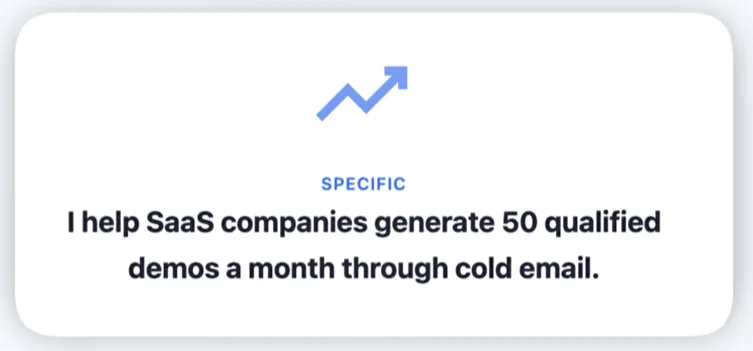
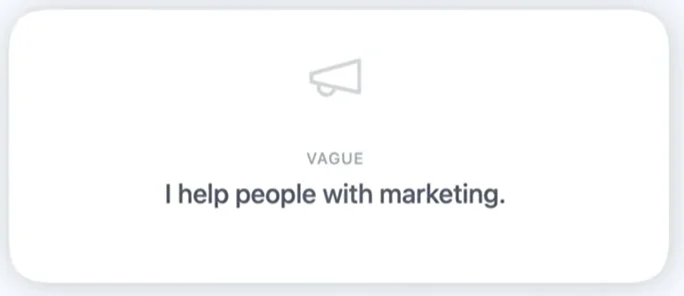
When last did you tweak your elevator pitch? Saying “I help people with marketing” is generic and ultimately forgettable. Saying “I help SaaS companies generate 50 qualified demos a month through cold email” is specific, attention-grabbing, and makes you sound like an expert.
Follow this rule: The more specific you are about who you help and what outcomes you deliver, the more authority you’ll have in that space.
15) What happens when my offer isn’t clear enough?
“A guide to productivity” is vague. No one wants to buy vague offers. “The exact morning routine that helped me build a seven-figure business while working four hours a day” is specific.
Conversion principle: Vague offers attract vague interest, which leads to low conversions. Specificity attracts committed buyers.
Testimonials & social proof
16) What makes an effective testimonial?
“This course is amazing!” is nice, but it doesn’t sell. “I used this course and landed my first $5,000 client within two weeks” is what actually converts prospects into customers.
Action step: When collecting testimonials, ask specific questions:
- What was your situation before using this product?
- What specific results did you achieve?
- How long did it take to see those results?
- What would you tell someone considering this purchase?

→ READ A SUCCESS STORY | ‘The Freedom Formula: How Rob Cornish Turned Redundancy Into $41,000 a Month in Recurring Income‘
Offer structure & messaging
17) What’s the benefit of a clear sales pitch?
If you need more than 60 seconds to explain your offer and why someone should buy it, it’s time to simplify – especially for digital product businesses.
🚩 Red flag: If you’re doing one-on-one sales calls just to explain what your product is, that’s a sign your messaging needs work. The offer should be self-explanatory.
18) Do you need to already have a large audience to start a digital product business?
Audience intent is everything. Success stories prove this principle:
👍 Creators with 500 followers making $50,000 launches because their message was laser-focused
👎 Creators with 50,000 followers launching to crickets because their message was too broad
Key insight: Audience size matters less than your message-market fit. A small, engaged audience that resonates with your specific message will always outperform a large, disengaged following.
→ MORE FROM THE BLOG | ‘How Do You Monetize an Email List: 6 Proven Strategies for Turning Subscribers Into Revenue‘
Evergreen funnels & urgency
19) Do evergreen sales funnels still work in 2026?
Evergreen funnels are powerful tools for passive income, but only if people are searching for your solution year-round.
Caution: If your product solves a seasonal problem or is tied to a trend, evergreen automation will struggle. Make sure the demand is consistent before you invest in building automated systems.
20) Is creating urgency an effective sales tactic?
Fake countdown timers and made-up scarcity tactics might have worked once, but now they simply destroy trust. Today’s consumers are savvy and can spot manipulation.
Legitimate urgency tactics:
- Limited enrollment spots (that actually close)
- Time-limited bonuses (that genuinely expire)
- Price increases (that actually happen)
People can smell fake urgency from a mile away – and it damages your reputation long-term.
→ HOW TO USE COUNTDOWN TIMERS CORRECTLY | ‘Create Real Urgency, Earn More Sales: A Quick Guide to ThriveCart Countdown Timers‘
Launch strategy & optimization
21) Does messaging affect the sales funnel?
When a launch flops, people blame the funnel, the platform, or the timing. But 90% of the time, it’s the messaging.
Common issues:
- The offer wasn’t clear
- The audience wasn’t right
- The problem wasn’t compelling enough
Action step: Fix the message before you blame the funnel. Test different angles, pain points, and outcome statements before rebuilding your entire sales system.
Product naming strategy
22) What’s the significance of having a good product name?
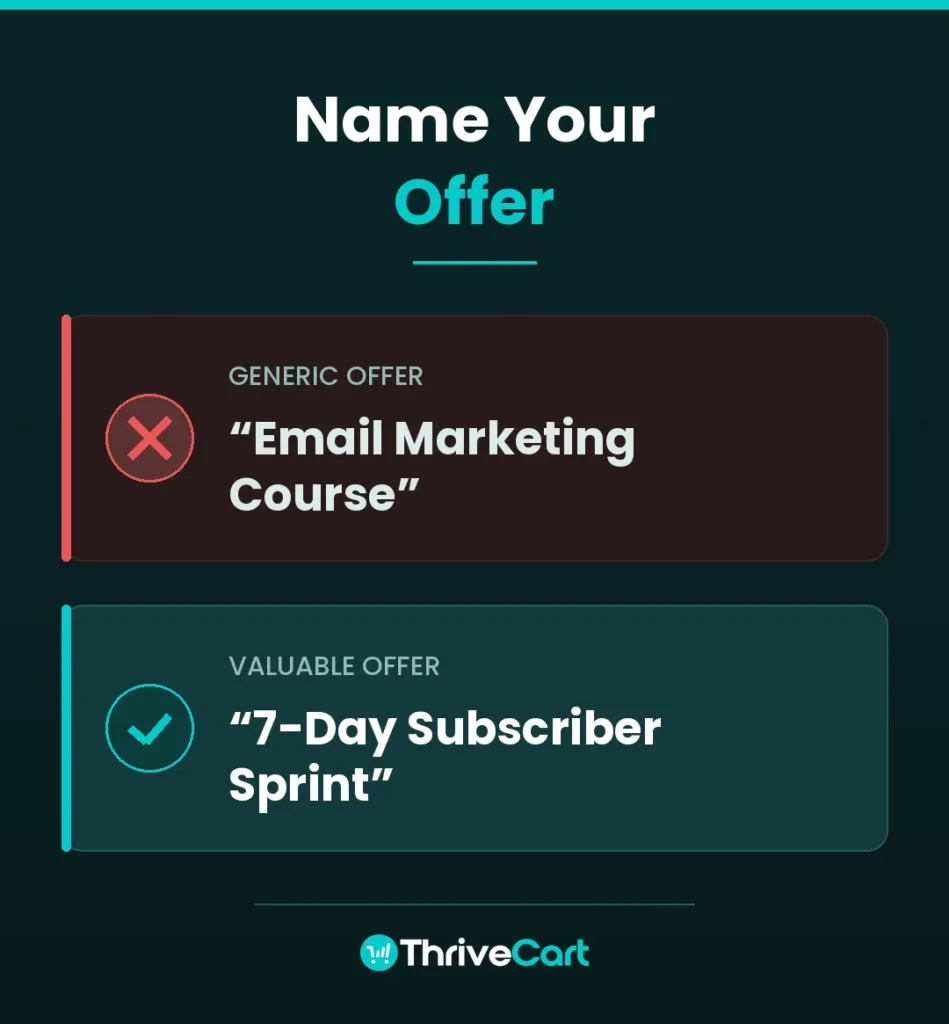
Product names matter more than most creators realize. Compare these examples:
❌ Generic: “Email Marketing Course”
✅ Valuable: “7-Day Subscriber Sprint”
The second option sounds like a specific, valuable system with a clear timeframe – not just another course.
Naming principles:
- Include the outcome or transformation
- Add specificity (timeframes, numbers, and frameworks)
- Make it memorable and repeatable
→ WANT TO SELL MORE, SIMPLY? READ THIS! | ‘How to Sell Digital Products in 2026: A Step-by-Step Guide‘
Customer journey & value delivery
23) What’s one proven way to present value to the customer?
People don’t want to learn everything about a topic. They don’t have the time to consume it and you probably don’t have the time and resources to create an encyclopedia of information on one specific topic. Instead, what they want is the fastest path from where they are to where they want to be.
Positioning: Present your product as the shortcut, not the encyclopedia. “Everything you need and nothing you don’t” is a powerful frame.
This also ties in neatly with lesson #29.
24) Should instinct or data lead decision-making?
Making decisions based on what you think will work is a common beginner mistake. Start tracking everything:
- Email open rates
- Click-through rates
- Conversion rates at every stage
- Time-on-page metrics
- Cart abandonment rates
Reality check: The data often tells a completely different story than your assumptions. Let the numbers guide you, not just your gut.
→ HANDPICKED FOR YOU | ‘How to Track Your Sales Performance Like a Pro With ThriveCart‘
Marketing vs creation balance
25) Should I spend more time perfecting or selling the product?
Creators love to create, so they spend 90% of their time building the product and 10% selling it. Then they wonder why it’s not selling.
The ratio to flip: Spend more time on marketing than you do on creation. A good product with great marketing will outperform a great product with poor marketing every time.
26) How important is feedback to a digital product business?
It feels good when people say, “Wow, this is so valuable!” But compliments don’t pay the bills.
Mindset shift: Your goal is to create something people are willing to pay for, not just give you praise. Positive feedback is nice, but purchasing behavior is the only metric that matters for business sustainability.
Product design & customer support
27) Do digital products need customer support comms?
If your product creates a flood of customer support questions and DMs, you’ve built yourself a job, not a business.
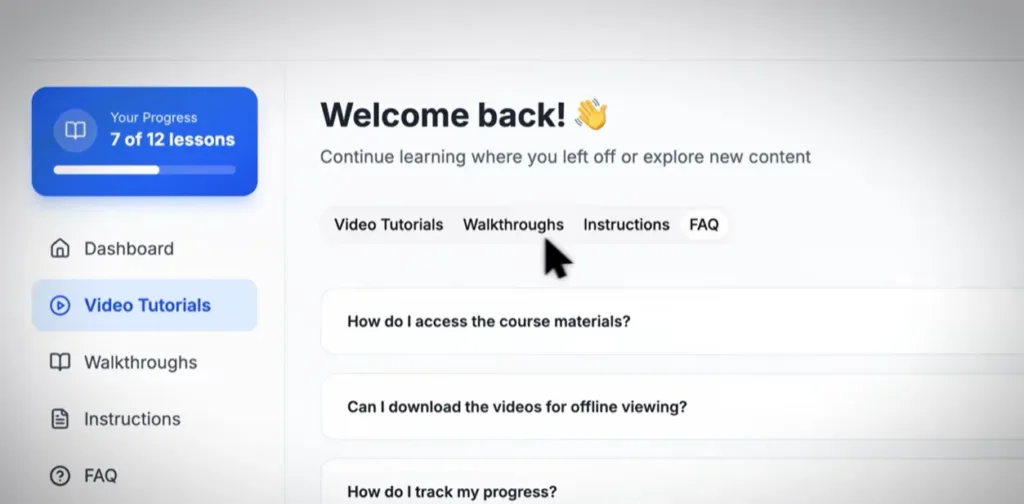
Design for self-sufficiency:
- Include comprehensive FAQs
- Create video walkthroughs
- Provide step-by-step tutorials
- Anticipate common questions and answer them proactively
Your product should reduce your workload over time, not increase it.
→ EXPLORE MORE | ‘From Influence to Independence: The New Blueprint for Lifestyle Creators‘
Customer lifetime value
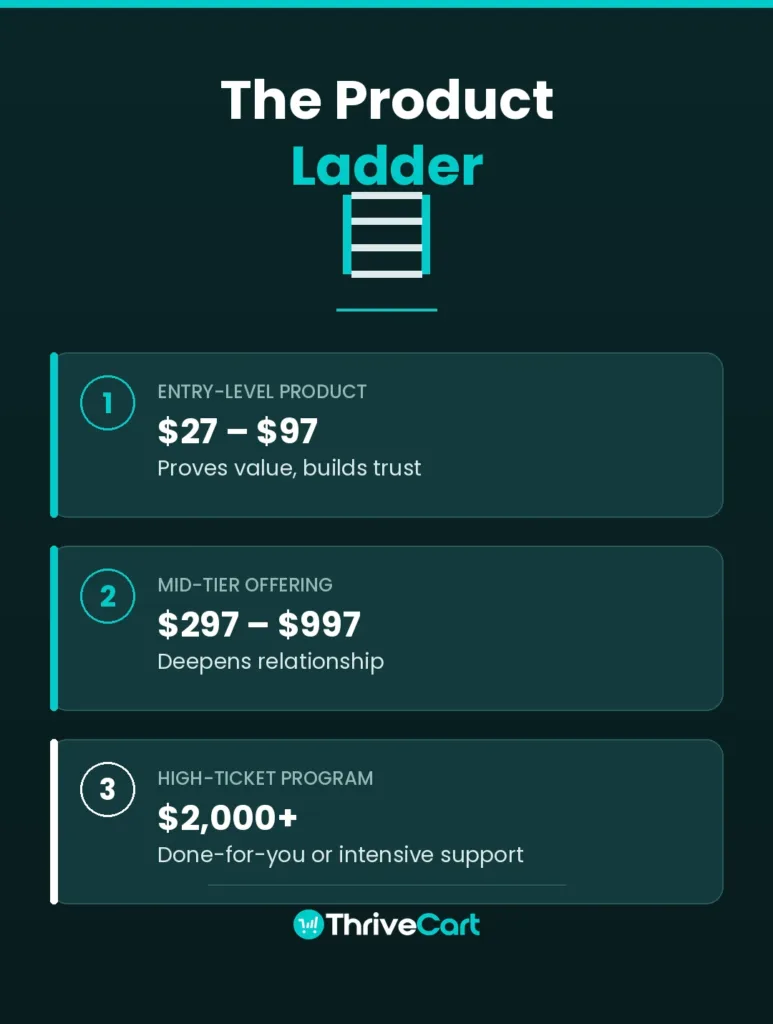
28) What’s a product ladder for digital products?
A one-time purchase is nice, but a customer journey is better. Your first product should naturally lead to a second offer.
The product ladder:
- Entry-level product ($27-$97): Proves value, builds trust
- Mid-tier offering ($297-$997): Deepens relationship
- High-ticket program ($2,000+): Done-for-you or intensive support
Think in terms of customer lifetime value, not just individual product sales.
29) How many digital products should be in my catalog?
Many new creators think they need a huge catalog of products to make real money. But customers find a streamlined product catalog less overwhelming. This phenomenon is known as the “paradox of choice”, a phrase coined by psychologist Barry Schwartz. It’s when having multiple options stops feeling like freedom of choice and becomes overwhelm, anxiety, and decision fatigue.
Focus principle: One really good product that solves a painful problem will make you more money than five mediocre ones. Perfect one offer before moving to the next.

Sales mindset & customer feedback
30) What should I do if selling makes me feel uncomfortable?
If you feel uncomfortable selling, it’s because you don’t truly believe in your product.
Reframe it like this: If you know your product genuinely helps people, then selling is just serving. You’re helping someone solve a problem they’re struggling with. This mindset shift makes marketing feel more authentic and less “salesy.”
31) What’s the significance of market research for a digital product business?
You can research, survey, and ask questions all day long, but you won’t truly know if people will buy until you ask them to.
Action over analysis: Stop overthinking and start showing up. Real market feedback beats theoretical planning every time.
→ SELL SMARTER WITH THESE TOP TIPS | ‘10 Tips to Increase Conversion Rate With ThriveCart‘
Guarantee strategy & early customers
32) What kind of guarantee should I offer on a digital product?
People are scared to buy because they’re scared it won’t work. A strong, clear guarantee removes that barrier to purchase.
Effective guarantee types:
- Money-back guarantee (30-60 days)
- Results-based guarantee (“Get X result or your money back”)
- Satisfaction guarantee (“Love it or leave it”)
The psychology behind it: Guarantees are especially important if customers don’t know you yet. They signal confidence in your product and reduce perceived risk.
33) How can I capitalize on early sales momentum?
Those first buyers will give you the feedback, testimonials, and insights you need to improve your product and marketing.
Treat them like gold:
- Ask detailed questions about their experience
- Collect their success stories
- Request specific feedback on what worked and what didn’t
- Offer beta pricing in exchange for detailed testimonials
This feedback loop is invaluable for refining your offer.
Launch timing & product delivery
34) How do you know if the product is ready to go to market?
As internet entrepreneur and LinkedIn co-founder Reid Hoffman famously wrote, “If you’re not embarrassed by the first version of your product, you’ve launched too late.” This lesson is hard to accept but absolutely true. Your first product should be a little rough around the edges.
The reality: If it’s polished and perfect, you spent too much time on it before getting it to market. Launch, learn, iterate. Version 2.0 should be informed by real customer feedback, not your assumptions in a vacuum.
35) What fulfillment methods does a digital product business need?
The experience of accessing your product is part of the product itself. Sending people to a Google Drive link or Dropbox folder communicates low value.
Professional delivery includes:
- A clean, branded members area
- Instant delivery and access
- Organized, intuitive navigation
- Professional presentation
Customer perception: A polished delivery experience makes people feel like they made a smart purchase – even before they consume the content.
→ RELATED READING TO DOWNLOAD TODAY | ‘Building a Thriving Business in the $6.3 Trillion Health & Wellness Market‘
FAQs
Frequently asked questions about starting a digital product business.
Q: What is a digital product business?
A: A digital product business offers downloadable or access-based goods – online courses, ebooks, templates, memberships, audio, or software – with no inventory or shipping. Margins typically run 80-95% because a single file or login can serve unlimited customers. Revenue is driven primarily by marketing reach and offer clarity, not production cost.
Q: How much does it cost to start a digital product business?
A: A lean digital product business can launch for under $100/month: a checkout platform (one-time or low monthly cost), an email tool (free up to ~500 contacts), and a hosting platform for course or membership content. The largest “cost” is your time during validation and creation – typically 4-12 weeks for a first product.
Q: What types of digital products sell best?
A: The five highest-margin digital product categories are online courses, memberships, templates, ebooks/guides, and digital downloads (audio, fonts, presets). Courses and memberships generate the highest lifetime value because of recurring revenue and natural upsells, while templates and ebooks offer the fastest validation cycle for first-time creators.
Q: How do I validate a digital product before building it?
A: Find 10 people in your target audience and ask them to pre-buy your product – not “would you buy this?” but actual payment commitments. Pre-selling validates demand, generates startup cash, and surfaces the exact language buyers use. CB Insights data shows 43% of startups fail because of no market need; pre-selling eliminates that risk before you build.
Q: Is a digital product business profitable?
A: Yes – digital products typically run 80-95% margins because there’s no per-unit cost. ThriveCart merchant Kamila von Retteg has generated over $3M selling digital products. Profitability depends on three things: solving a problem people actively search for, pricing for the transformation (not the production cost), and spending more time marketing than creating.
Q: What’s the difference between a digital product and a physical product business?
A: Digital products are delivered electronically (course access, downloads, membership logins) with no inventory, shipping, or per-unit cost. Physical products require fulfillment, warehousing, and shipping costs that compress margins. A single digital product can serve unlimited buyers without additional cost, while physical products require restocking after every sale.
Q: How long does it take to start a digital product business?
A: From idea to first sale, a focused creator can launch in 4-12 weeks: 1-2 weeks for validation (10 buyer conversations), 2-6 weeks for building a minimum viable product, and 1-4 weeks for the pre-launch sequence. Pre-selling can compress this to 2-4 weeks by funding creation during the sales process.
Ready to take action?
These 35 lessons represent years of trial and error distilled into actionable wisdom. Your next steps:
- Choose at least one lesson that resonates most with where you are right now
- Take one action based on that lesson this week
- Track the results of that change
- Iterate and improve based on what you learn
The creator economy is full of opportunities for those who validate before they build, price strategically, market clearly, and deliver exceptional value. With these lessons as your foundation, you’re equipped to avoid the most costly mistakes and accelerate your path to a profitable digital product business.
Start your digital product business Today!
Selling online is easy with ThriveCart. Explore our platform features and plans designed specifically for creators and coaches who are serious about building profitable businesses.


